Moving to Thailand? Your Bank Account Is the Hard Part
Nobody plans their relocation around a bank branch. In 2026 they should. Tourist stamps no longer open accounts, the DTV is a coin flip, and one document catches almost everyone out.

This is bank policy, not immigration law. No statute bars a foreigner from holding a Thai bank account. What has changed is how banks apply know-your-customer and anti-money-laundering rules under pressure from the Bank of Thailand and AMLO. Requirements differ by bank, by branch and by officer — call your specific branch before you travel to it, and treat any single online account of "what the rules are" as one data point.
Bangkok — Almost everyone moving to Thailand builds the same mental checklist: visa, flights, somewhere to live, then sort out the money once you land. That last step used to be an afternoon's errand. In 2026 it is the part most likely to go wrong, and the part almost no relocation guide prices properly.
The headline is simple. Thai banks have spent eighteen months tightening who they will accept, and the effective floor is now a long-stay non-immigrant visa. Arrive on a visa exemption or a tourist visa intending to open an account when you get here, and at the major retail banks the answer is no.
Which visas actually open an account
For anyone moving to Thailand long-term, the categories that work reliably across the big banks are the ones with a recognised long-stay purpose: Non-Immigrant B for work, Non-Immigrant O for retirement or family, ED for enrolled students, and the LTR. A Thailand retirement visa holder with the financial requirement already met is about the smoothest case there is.
Tourist visas and visa-exemption entries are out. That is not a grey area any more.
The DTV problem nobody warns you about
Here is the part that catches people genuinely by surprise, because it feels like it should not be true. The DTV is a five-year, government-issued long-stay visa — and it does not reliably open a Thai bank account.
The reason is classification. Banks' compliance teams read the DTV as sitting on the tourist side of the Immigration Act rather than the resident side, and process it accordingly. In practice, outcomes vary: some branches accept it case by case, many refuse politely and without a written reason. Reports through the first half of 2026 also describe accounts opened by DTV holders in late 2024 being frozen or flagged during periodic compliance reviews.
Be careful with the absolutes you will read on this. Some sites say DTV holders are categorically banned; practitioners describe it as hit-or-miss and branch-dependent. Both descriptions come from real experience. The honest planning assumption is this: do not build your move on the expectation that your DTV will get you an account.
A five-year visa that does not open a bank account is still a five-year visa. It is just not a residency permit, and the banks read it that way.
The document that catches everyone: certificate of residence
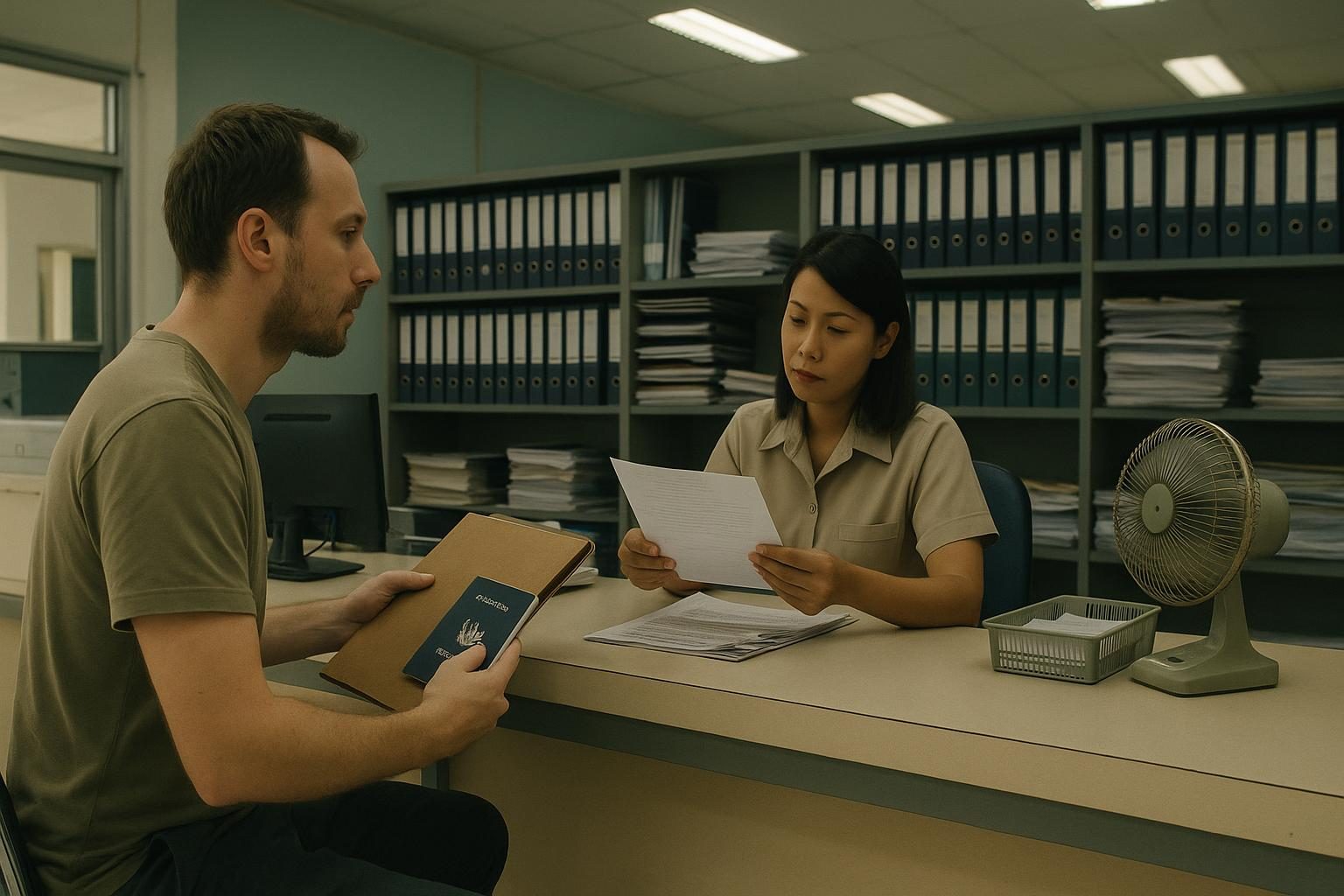
If one thing derails a first branch visit, it is this. A certificate of residence is now a near-universal requirement, and it is not your lease. It is a formal document issued by the Immigration Bureau, or by your embassy in Bangkok, confirming where you live.
Bring the rest too, because a missing item means a second trip:
- Passport with at least six months' validity and your entry stamp visible.
- A current qualifying visa — valid on the day, not "renewing next week".
- Proof of Thai address — rental agreement, a utility bill in your name, or a Thai driving licence.
- A Thai mobile number registered in your own passport name. This one quietly fails a lot of applications: a SIM registered to a shop, a friend or a partner will not pass automated anti-fraud checks.
- Initial deposit — modest, but varies by bank and account type.
- Work permit (Non-B) or enrolment letter (ED), if they apply to you.
Since late 2025, expect a passport chip-read and an on-site face scan as standard. Two practical consequences: your passport's electronic chip must actually work, and remote or agent-assisted opening is effectively finished. You go in person.
Real costs and provincial variation
If you are costing out a move, the certificate of residence is the one line item worth budgeting for that no relocation checklist mentions. Immigration office fees vary widely by province: some offices issue it free, others charge in the low hundreds of baht, and same-day express service typically runs 300–500 baht depending on where you file. Turnaround ranges from same-day to about two weeks. The embassy route, which is what you are pushed towards without a long-stay visa, generally costs considerably more.
This is the familiar pattern in Thai immigration rules applied to banking: the national policy is uniform, the counter is not. A Bangkok expat at a busy Sukhumvit branch, someone doing Chiang Mai living, and a Phuket digital nomad will each get slightly different lists. Renting in Thailand somewhere smaller can actually help, because provincial branches see fewer foreigners and are sometimes more willing to work through the file with you — and sometimes far less. Ask locally, in advance.
The catches nobody mentions
An open account is not a permanent account. Periodic compliance reviews are real, and a visa category the bank no longer likes can surface at review time rather than at opening. Do not make a Thai account the only place your money lives.
The order of operations matters. Sort the visa first, then the address, then the certificate, then the bank. People who do it in the other order lose weeks.
Agents cannot fix this one. Plenty will offer to. With face scans and chip-reads done in-branch against immigration records, there is very little left for a third party to influence — and paying someone to "arrange" a bank account is a good way to lose money.
Budget the friction, not just the fees. The direct cost of the cost of living in Thailand story is well covered; the setup costs are not. A second trip to immigration, an unexpected embassy fee and a fortnight of waiting are the real expense here.
Key takeaways — 13 August 2026
- Tourist visas and exemption stamps will not open an account at the major banks. Plan around it before you fly.
- The DTV is unreliable for banking. Not officially disqualified, not dependable either — and existing accounts have been flagged at review.
- Non-B, Non-O, ED and LTR are the categories that work.
- Get a certificate of residence early. It is not your lease, it takes time, and fees vary by province.
- Register your Thai SIM in your own passport name. A borrowed number will fail the checks.
- Verify with your actual branch. Bank policy, branch practice and officer discretion are three different things.
- Decide banking before you fly. For most people moving to Thailand, this now belongs in the visa choice itself.
The honest summary
None of this is a reason to abandon a move. The underlying case for living in Thailand has not weakened: the cost of living remains excellent value, Thailand healthcare for foreigners is genuinely good, and the question of the best place to live in Thailand still has more strong answers than most countries offer. Our city guide is a reasonable place to start weighing them.
What has changed is that banking is no longer an afterthought you handle in week two. It is now a constraint that should shape which visa you apply for in the first place — which is an odd sentence to write, and an honest one. If reliable local banking matters to you, that argument belongs in the visa decision, not after it.
And verify at source. Bank websites, then the specific branch, then your embassy for the certificate if you need that route. Anyone moving to Thailand on the strength of a forum post from 2024 is planning against rules that no longer exist.
Sources
- Issa Compass, "Opening a Thai Bank Account as a Foreign Resident in 2026", published 28 May 2026, updated 13 August 2026 — qualifying visa categories, DTV treated as hit-or-miss, certificate of residence now near-universal, branch-level discretion
- MBMG Group, 2026 update — why Thai bank account opening has tightened; certificate of residence as a standard document
- Pattaya Mail, "Inside the 'Maximum Security' Era for Expat Account Opening in Thailand (2026)" — passport chip-reads and in-branch face scans mandatory since late 2025; Thai mobile number must match passport name; remote opening phased out
- Bank of Thailand, Anti-Money Laundering Office and NBTC — regulatory pressure behind bank KYC/AML tightening; Thailand's participation in the Common Reporting Standard
- Statrys and Wise banking guides, 2026 — bank-by-bank acceptance of Non-B, Non-O, ED and LTR categories; tourist visa refusal at major retail banks
- Thai immigration office fee schedules and provincial guides, 2026 — certificate of residence issued free at some offices, express same-day service typically 300–500 baht, turnaround from same day to around two weeks
- Reported accounts, first half of 2026 — DTV-held accounts opened in late 2024 frozen or flagged during periodic compliance reviews
This article is for informational purposes only and is not legal, immigration or financial advice. Bank requirements vary by institution, branch and province and change without notice. Confirm current requirements directly with your chosen bank branch, the Thai Immigration Bureau or a qualified professional before making relocation decisions. Verified 13 August 2026.