Thai Visa Holders Face New Thailand Deportation Rules
A regulation signed on 26 August and in force from 28 August gives the Interior Minister a direct route to deport foreigners. Most long-stayers are nowhere near it — but two of the six listed offences are ones ordinary expats stumble into by accident.

This one is real and already in force. The Prime Minister's Office Regulation on Deportation B.E. 2569 was published in the Royal Gazette on 27 August 2026 and took effect on 28 August. Unlike the visa-exemption changes we have been tracking since May, there is no waiting period and no pending announcement — it is live.
Bangkok — If you hold a Thai visa of any kind, you will have seen the headlines this week about Thailand's new deportation rules and wondered whether they change anything for you. For the overwhelming majority of people living in Thailand legally, they do not. But the regulation is worth ten minutes of your attention, because two of the six offences on its list are ones that decent, law-abiding foreigners fall into through paperwork drift rather than bad intent.
Here is the honest read of what the new rule means for your Thai visa, without the scare copy the aggregator sites have been running since Friday morning.
What the regulation actually does
Prime Minister Anutin Charnvirakul signed the Prime Minister's Office Regulation on Deportation B.E. 2569 on 26 August. It appeared in the Royal Gazette on 27 August and took effect on 28 August 2026. That sequence matters, and readers of this site will know why: Cabinet approval alone changes nothing, Gazette publication does. This one cleared both in about forty-eight hours.
The regulation does not create a new offence. Deportation has always existed under the Immigration Act. What it creates is procedure — a defined pipeline that moves a case from a court or a prison to the Interior Minister's desk quickly, and tells each agency what it must hand over and when.
Two categories are covered. The first is conduct judged to threaten public order, good morals or public wellbeing. The second is conviction for one of six specific offences:
- Entering or remaining in Thailand illegally
- Working illegally
- Operating a business unlawfully under the Foreign Business Act
- Forging or using forged official documents
- Any offence carrying a prison term of five years or more
- Acting as principal, instigator or supporter in any of the above
The Interior Ministry's permanent secretary reports the case; the minister issues the order. A re-entry ban of a set duration can be attached. The Department of Corrections must notify the ministry ahead of a qualifying foreign prisoner's release so the order can be considered before, not after, the release date. Where a court hands down a suspended sentence or a fine only, the Office of the Judiciary must notify the permanent secretary immediately — which is the quiet detail here, because it means a non-custodial outcome no longer ends the matter.
The offences are not new. The speed is. A file that used to stall between agencies for months now has a deadline attached to it.
Thai visa risk: the two lines that touch ordinary expats
Forgery, five-year crimes and illegal business operation are not accidents. Nobody drifts into them. The two that deserve your attention are the first and second on the list, because both have soft edges.
Overstay and "remaining illegally"
A short overstay is normally an administrative matter: 500 baht a day, capped at 20,000 baht, paid at the counter or on exit. That has not changed and this regulation does not change it. What has hardened is the tail end — the long overstays that go to court rather than to the cashier, and the cases where someone has been living in Thailand for years on an arrangement that quietly stopped being valid.
The most common version we see is not the backpacker who lost track of a date. It is the long-stayer whose Thai visa extension was handled by an agent, who never saw the underlying paperwork, and who discovers at renewal that the file behind their stamp does not hold up. If you cannot personally explain what permission you hold, on what basis, and when it expires, that is the gap worth closing this month.
Working illegally
This is the grey zone that has never been fully resolved, and the new procedure makes the downside sharper rather than the rule clearer. The Destination Thailand Visa permits remote work for clients outside Thailand. It does not permit work for the Thai market, and it is not a work permit. A Phuket digital nomad invoicing a Singapore company is fine. The same person taking on a local restaurant's social media for 8,000 baht a month is not, whatever the going assumption in the coworking space.
Nothing about that boundary moved this week. What moved is what happens after a conviction: the file now goes upstairs automatically rather than depending on someone remembering to send it.
Thai immigration rules are national, enforcement is provincial
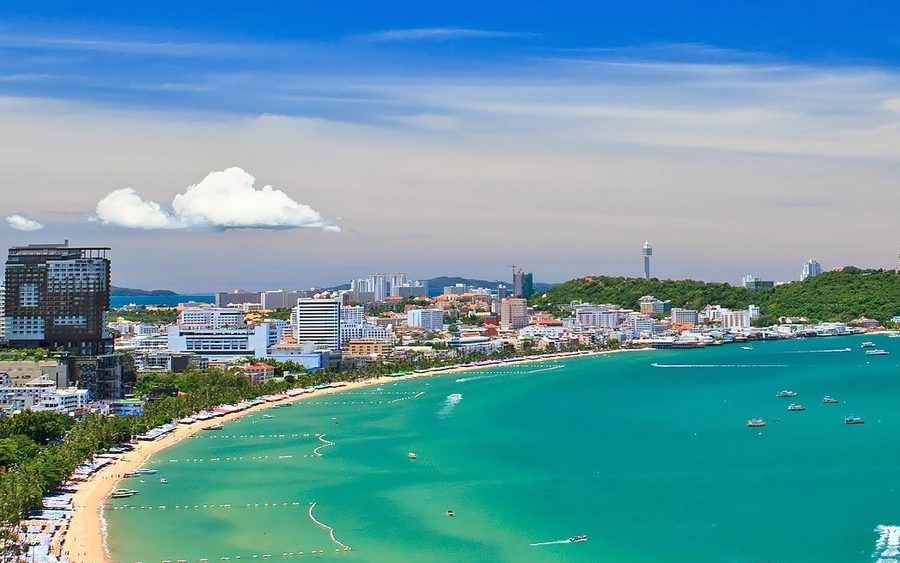
Thai immigration rules are written nationally and applied provincially, and this regulation does nothing to flatten that. Bangkok expat Thai visa files at Chaeng Watthana are handled by officers who see thousands of foreigners a week and apply the book closely. Chiang Mai living means a smaller office with more discretion and, historically, more patience with imperfect paperwork. Phuket and Chonburi carry the heaviest enforcement attention in the country, because that is where the visible problems concentrate.
The practical consequence is unglamorous. The same untidy file can pass without comment in one province and generate a formal record in another. Since a formal record is the first link in the chain this regulation formalises, tidiness is now worth slightly more than it was a week ago.
Human rights provisions worth knowing about
The regulation is not purely punitive, and this part was under-reported. Deportation decisions must comply with Thai law, Cabinet resolutions and Thailand's international obligations. The default destination is the person's home country, but where they would face torture, cruel treatment or enforced disappearance there, another state or an international organisation may request a transfer to a safe third country within seven days of the order. The person must consent in writing, the requesting party pays the costs, and the transfer must complete within thirty days — extendable twice by up to thirty days each.
For the ordinary retiree in Hua Hin this is academic. For journalists, activists and refugees who have been using Thailand as a waypoint, it is the most consequential paragraph in the document.
Key takeaways — 29 August 2026
- In force since 28 August 2026. Gazetted 27 August, signed 26 August. No waiting period.
- No new offences were created. The regulation builds procedure around powers that already existed.
- Six triggering convictions: illegal entry or stay, illegal work, illegal business, document forgery, any five-year-plus offence, and participation in those.
- Suspended sentences and fines now get reported too. A non-custodial outcome no longer closes the file.
- A re-entry ban can be attached to a deportation order.
- Routine short overstay is still a 500 baht/day fine, capped at 20,000 baht. That has not changed.
- Know your own file. If an agent holds your paperwork and you have never read it, get a copy.
What to actually do this week
Nothing dramatic. Four things, none of which cost money:
- Check your permitted-to-stay date in your passport against what you believe it to be. The stamp governs, not the Thai visa sticker and not what an agent told you.
- Confirm your 90-day report is current. Missing it is not on this list, but it puts a note on a file that officers read later.
- If you earn anything from a Thai source, get the work-permit question answered properly — by the Department of Employment or a licensed lawyer, not a Facebook group.
- If someone else holds your immigration paperwork, ask for copies. You are the one whose name is on it.
The honest summary
Thailand has not turned hostile to foreigners. The regulation opens by restating that people who come legally to visit, work, do business or live are welcome, and the enforcement it enables is aimed squarely at convicted offenders and illegal entrants. If you are on a Non-O retirement extension with a clean file and a current stamp — still the most common Thailand retirement visa route for people who retire in Thailand — this changes nothing about your life.
What it does confirm is a direction of travel we have now reported four times this month. The Thai state is getting faster and better connected at moving information about foreigners between agencies — the auto-gates, the digital arrival card, the tightened DTV visa Thailand application rules and now this. Each individual step is defensible. Together they mean the gap between an untidy file and a consequence keeps shrinking, and the old expat habit of leaving the paperwork to somebody else ages badly.
Verify at source. The Royal Gazette holds the text; the Immigration Bureau holds your record; your provincial office applies both. Anyone quoting you a fee to make a problem disappear is not a source, and under this regulation is closer to the list than you are.
Sources
- Royal Thai Government Gazette (Ratchakitcha) — publication of the Prime Minister's Office Regulation on Deportation B.E. 2569, 27 August 2026; effective 28 August 2026
- Bangkok Post, "Deportation regulation takes effect, targets lawbreaking foreigners", 28 August 2026 — two covered categories, six listed offences, inter-agency notification duties
- The Nation Thailand, "Anutin signs deportation rules effective August 28" — signature date of 26 August, Interior Minister's authority, re-entry ban provision
- Chiang Rai Times, "Thailand Rolls Out Strict New Deportation Rules for Foreigners", 28 August 2026 — Department of Corrections and Office of the Judiciary reporting duties; safe-third-country transfer terms, seven-day request window, thirty-day completion period and extensions
- The Pattaya News, 28 August 2026 — stated intent of faster decisions and improved inter-agency coordination
- Immigration Act B.E. 2522 (1979), as amended — underlying deportation power and the 500 THB per day overstay fine capped at 20,000 THB
- Foreign Business Act B.E. 2542 (1999) — basis of the unlawful business operation offence referenced in the regulation
This article is for informational purposes only and is not legal or immigration advice. The summary above is based on reporting of the Royal Gazette text and may not capture every provision; the Thai-language original governs. Thai immigration rules are applied at officer and provincial discretion and change without notice. If you believe your status may be irregular, consult a Thai-licensed lawyer or your provincial Immigration office before acting. Verified 29 August 2026.