Thailand Visa Rules: 30-Day Cap Starts 15 September
After eighteen months of rumour, the Royal Gazette has settled it. The 60-day visa exemption is repealed, 60 nationalities drop to 30 days, and land crossings are capped at two a year. Here is what actually changes, and what it costs to work around.
This one is published, dated and final. Four Ministry of Interior announcements appeared in the Royal Gazette on the night of 31 August 2026, Volume 143, Special Issue 207. They take legal force 15 days after publication, which puts the switchover at 15 September 2026. We have been reporting this as "pending" since May. It is no longer pending.
Bangkok — If your Thailand visa strategy has been "just turn up", the arithmetic changes in under two weeks. From 15 September 2026, nationals of 60 countries and territories — the United States, United Kingdom, Canada, Australia, Japan and all 27 EU member states among them — get 30 days visa-free instead of 60. The special 60-day scheme that has run since July 2024, and that covered 93 countries and territories, is formally repealed.
Nobody is being turned away. The entry process itself is untouched: no application, no fee, no embassy appointment. What has been halved is the length of the stamp.
What the new Thailand visa exemption rules actually say
1. Thirty days, and tourism only
The new text grants up to 30 days for tourism. The earlier wording, which stretched to short-term work and business activity, has been dropped. That is a quiet change and a significant one: if you have been entering visa-exempt to attend meetings or scout a business, the legal cover for that has just been removed from the exemption itself.
Officials have described the reform as a "one country, one entitlement" tidy-up, and framed it against abuse — unauthorised remote work, informal businesses run without a work permit, and stays that drifted into overstay. Whatever you make of the reasoning, the direction of Thai immigration rules through 2026 has been consistent: fewer soft edges, more documentation.
2. Land borders are capped at two entries a year
This is the part that will hit long-stayers hardest, and it is getting the least coverage. Visa-exempt entries through land checkpoints are limited to two per calendar year. Nationals of Brunei, Indonesia, Malaysia and Singapore are exempt from the cap; nobody else is.
Read that alongside the 30-day stamp and the old routine dies on the spot. Two 30-day stamps plus two 30-day extensions is roughly four months of legal presence a year from land runs, and then the calendar is spent. Air arrivals are not counted against the cap, but a Bangkok expat who has been living on border hops is now facing a real Thai visa requirement rather than a bus ticket.
| Category | Stay granted | Land-border cap |
|---|---|---|
| 60 listed countries and territories (US, UK, CA, AU, JP, all EU, India and others) | 30 days, tourism | 2 entries per calendar year |
| Mauritius, Seychelles | 15 days, tourism | 2 entries per calendar year |
| Brunei, Indonesia, Malaysia, Singapore | 30 days, tourism | No cap |
| Visa on Arrival (Azerbaijan, Belarus, Serbia) | Per VoA terms | Per VoA terms |
| Bilateral treaty countries (China, Russia, Vietnam, South Korea, Brazil and others) | 14, 30 or 90 days — unchanged | Unchanged |
3. The extension survives — and now matters more
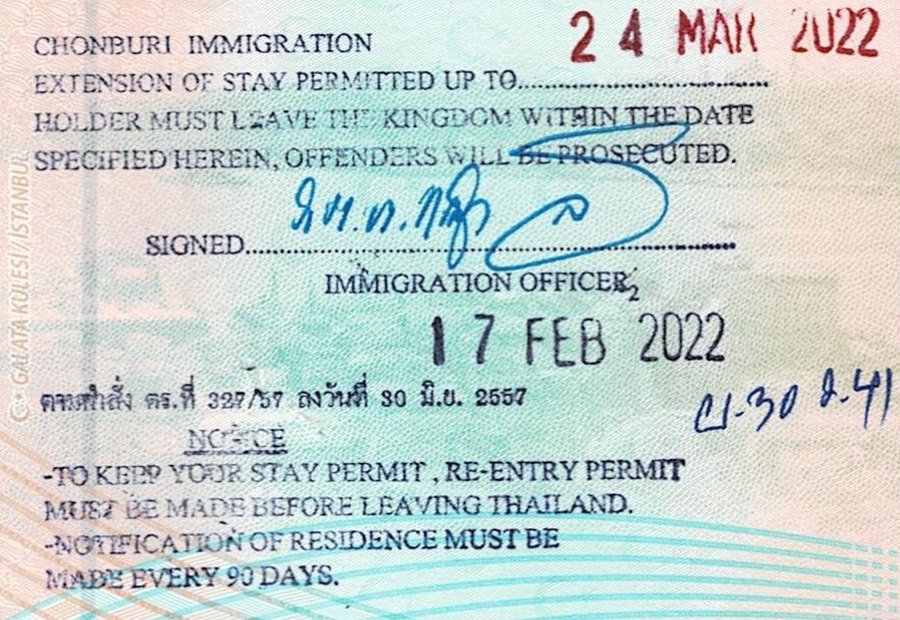
A one-time 30-day extension inside Thailand remains available on a TM.7 at an immigration office, roughly 1,900 baht, subject to approval. That gives a ceiling of 60 days total, down from the 90 that the 2024 scheme allowed. Budget half a day, a passport photo, copies of everything, and a queue that is about to get considerably longer in Chiang Mai and Phuket.
The rule is national. The queue is provincial. Fifteen September will not feel the same in Jomtien as it does in Khon Kaen.
Which Thailand visa holders are not affected at all
Plenty of people reading this are panicking for no reason. If you hold a Non-O extension based on retirement, a Thailand retirement visa route through a Non-OA, an LTR, an Elite membership or a DTV, none of this touches you. Bilateral exemption treaties are untouched too — 30 days for China, Russia, Vietnam and others, 90 days for South Korea, Brazil, Argentina, Chile and Peru.
Also unaffected: anyone already inside Thailand. The stay granted on your entry stands. And anyone who lands on or before 14 September still receives the 60-day stamp for that entry, even if the stay runs past the cutoff. That transitional line is worth a cheap flight if your dates are close.
The honest cost of the change
For a two-week holiday, this is a non-event. For anyone treating exemption stamps as a substitute for a visa, here is the real number.
Under the old pattern, 60 days plus a 30-day extension meant one immigration visit for three months of presence — 1,900 baht and an afternoon. Under the new one, the same 90 days needs two entries, two extensions and either a flight or one of your two annual land slots: realistically 4,000 to 12,000 baht a quarter once travel is counted, plus two lost days. Over a year, 20,000 to 45,000 baht and a permanent low-grade anxiety about the calendar.
Against that, a properly matched long-stay Thailand visa is usually cheaper and always calmer. That is why the cost of living in Thailand conversation should start with the visa, not the rent. Chiang Mai living at 25,000 baht a month is no bargain if you are burning 3,000 a month on border logistics to stay there.
Key takeaways — 2 September 2026
- Effective 15 September 2026. Published in the Royal Gazette on 31 August, Volume 143, Special Issue 207; in force 15 days later.
- 30 days, not 60, for 60 listed countries and territories. The July 2024 scheme is repealed.
- Tourism purpose only. The old short-term work and business language has been removed.
- Two visa-exempt land entries per calendar year — except Brunei, Indonesia, Malaysia and Singapore.
- One 30-day extension still available in-country, TM.7, about 1,900 baht, subject to approval. Ceiling is 60 days.
- Arrive on or before 14 September and you keep the 60-day stamp for that entry.
- Long-stay visas are untouched: Non-O, Non-OA, LTR, Elite, DTV, marriage and education routes all continue as before.
- The TDAC arrival card still applies — file it within 72 hours of arrival, regardless of which stamp you get.
What to do in the next two weeks
Three practical moves, in order. First, check which Thailand visa category your nationality now sits in — the 30-day list, the 15-day list, or a bilateral treaty. They are genuinely different regimes, and India, Croatia, Bulgaria, Cyprus, Malta and the Maldives all moved between categories in this round. Second, if you have a trip booked that straddles the date, look hard at pulling it forward to land by 14 September. Third, if you have been running your life here on exemption stamps, price a real visa this month rather than in January when the land cap bites.
And do the verification yourself. Our visa exemption guide tracks the current lists, but the authoritative answer for your passport sits with the Royal Thai Embassy or Consulate-General for your country and the Department of Consular Affairs. Immigration officers will apply the new stamps from 15 September whatever a travel blog said in August.
The bigger picture for anyone moving to Thailand
Zoom out and the pattern of 2026 is unmistakable: e-gates, the digital arrival card, tighter DTV screening at the consulates, a clearer deportation procedure, and now a narrower exemption. Thailand is not closing. It is sorting — short visits one way, declared long stays the other — and the middle ground of semi-permanent tourists is being squeezed out deliberately.
If you are weighing up the best place to live in Thailand, that sorting should change how you plan rather than whether you go. Pick the Thailand visa route that matches your actual life: pension income points to a Non-O, remote income to a DTV or LTR, a Thai spouse to a marriage extension. Then let the location questions — renting in Thailand, Thailand healthcare for foreigners, whether a Phuket digital nomad hub or a quieter provincial city suits you — be decided on their own merits. Those are five-year questions. The exemption stamp was never more than a 60-day one, and from 15 September it is a 30-day one.
Sources
- The Pattaya News, "Thailand Publishes Official Notice Ending 60-Day Visa-Free Stays", 1 September 2026 — Royal Gazette Volume 143, Special Issue 207 dated 31 August 2026; the 60-country list; land-border cap; 15-day category for Mauritius and Seychelles; Visa on Arrival reduced to Azerbaijan, Belarus and Serbia; bilateral treaties unaffected
- Thailand Business News, "Thailand's Visa-Free Stay Drops from 60 to 30 Days Starting September 15, 2026", 1 September 2026 — four Ministry of Interior regulations, effective date, the 14 September transitional line, the TM.7 extension at approximately 1,900 baht, and the TDAC requirement
- LoyaltyLobby, "Confirmed: Thailand Reduces Visa-Free Entry Allowance From September 15, 2026", 1 September 2026 — independent confirmation of the effective date and the land-border limit
- Thai Immigration Bureau — in-country extensions of stay, TM.7 procedure and 90-day reporting
- Department of Consular Affairs, Ministry of Foreign Affairs of Thailand — authoritative visa and exemption lists by nationality
This article is for informational purposes only and is not legal or immigration advice. The announcements described here were published in the Royal Gazette on 31 August 2026 and take effect on 15 September 2026; category lists, fees and processing practice change without notice and are applied differently by individual immigration checkpoints and provincial offices. Confirm your own nationality's entitlement with a Royal Thai Embassy or Consulate-General, or with the Department of Consular Affairs, before booking travel. Verified 2 September 2026.