Retire in Thailand: The Strong Baht Is Quietly Cutting Your Pension
Nobody changed your pension. The exchange rate did it for them. Here is what a firmer baht has done to the cost of living in Thailand — and to the visa maths underneath it.
The US dollar bought roughly 33.0 baht in the week to 13 September 2026. The 2026 average sits near 32.3, with a low of about 30.9 in March — the firmest baht in close to five years. Sterling bought about 44.6 baht on 13 September. Rates move daily; check yours before you act on any number here.
Hua Hin — If you retire in Thailand on a fixed foreign pension, 2026 has handed you a pay cut that nobody announced and nobody can appeal. The Thai baht has spent the year near its strongest levels since 2021, and every point of that strength comes straight out of the money you actually spend on rent, food and hospital bills. No rule changed. No form was filed. The number at the bottom of your bank app simply got smaller.
This is the part of moving to Thailand that the brochures never model. People who plan to retire in Thailand budget the visa, the condo and the health insurance, then assume the exchange rate is background noise. It is not. For a retiree, it is the single largest variable in the whole plan.
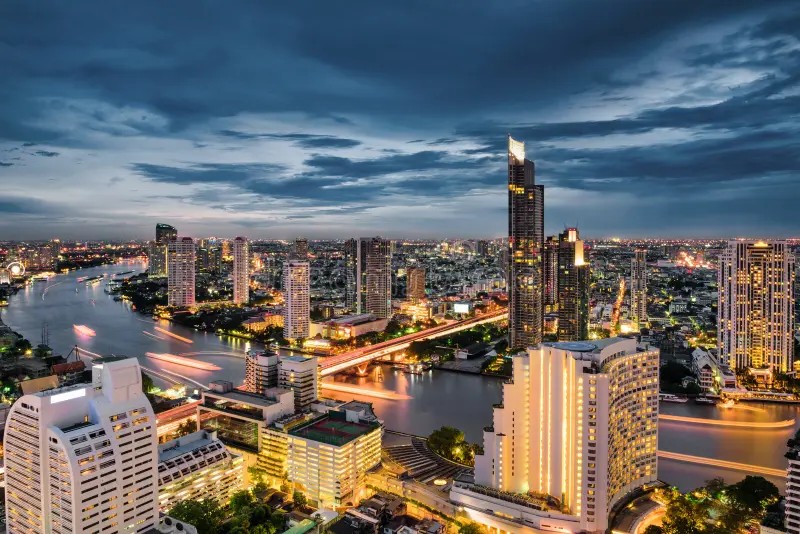
What a firmer baht does to a foreign pension
The arithmetic is brutally simple, which is why so few people run it. Take a monthly transfer and price it at three plausible rates.
| Monthly transfer | At 35.0 THB/USD | At 33.0 THB/USD | At 31.0 THB/USD |
|---|---|---|---|
| USD 1,500 | 52,500 baht | 49,500 baht | 46,500 baht |
| USD 2,000 | 70,000 baht | 66,000 baht | 62,000 baht |
| USD 2,500 | 87,500 baht | 82,500 baht | 77,500 baht |
A drift from 35 to 31 is roughly an 11 per cent cut in local spending power. On USD 2,000 a month that is 8,000 baht gone — about a mid-range condo maintenance bill, a decent health insurance premium instalment, or a month of groceries for two. Nothing about your life in Thailand got more expensive. Your money simply got smaller on arrival.
Thai inflation has been mild. The pain in most expat budgets this year is not Thai prices. It is the conversion.
Why the baht is strong in 2026
Three things are pushing in the same direction. Thailand runs a current account surplus and record foreign reserves. Global gold has run hard, and Thailand’s unusually large retail gold market means gold flows feed straight into baht demand — enough that the Bank of Thailand has tightened reporting and daily caps on app-based gold trading specifically to take heat out of the currency. And capital has rotated into Asian assets while Western rate expectations soften.
Two honest caveats. First, the central bank is leaning against appreciation, not engineering it, so the trend is not one-way. Second, the baht eased back to around 33 by mid-September from its March high near 31. If you are planning a decade of living in Thailand, plan for a range, not a rate.
Cost of living in Thailand: the 2026 reality
Here is what it actually costs to retire in Thailand this year. Broad ranges, because provincial variation is enormous. A single person living modestly in a provincial town runs roughly 26,000–35,000 baht a month. A comfortable Western-standard retirement in Chiang Mai or Hua Hin is closer to 50,000–75,000 baht. Bangkok or Phuket, with a decent condo and private healthcare, pushes 70,000–100,000 baht.
Renting in Thailand is where the currency bites first, because leases are written in baht for twelve months and your income is not. A 25,000-baht Chiang Mai one-bedroom cost about USD 715 at 35; it costs about USD 806 at 31. Same apartment, same landlord, 13 per cent more dollars.
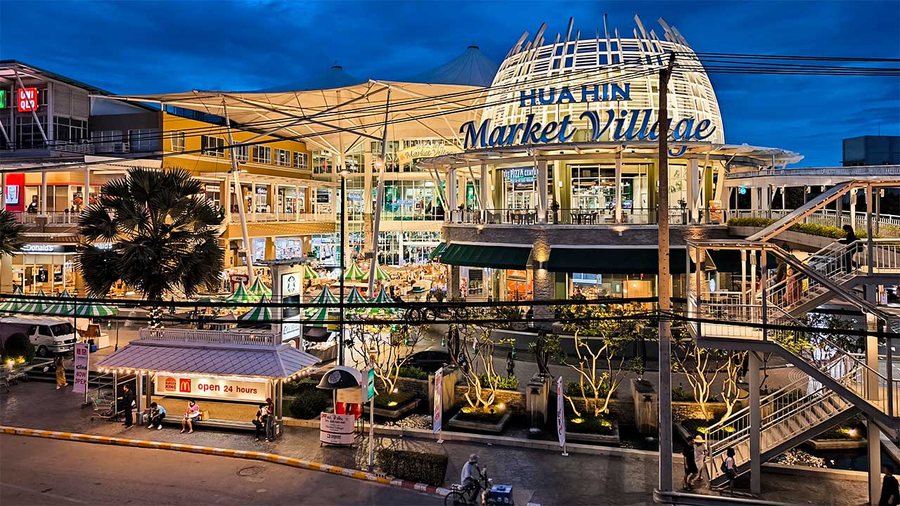
Where the exchange rate meets the Thailand retirement visa
This is the part that surprises people, and it is the reason a currency story belongs on a visa site at all. The financial tests you must pass to retire in Thailand legally — the tests behind every Thailand retirement visa — are written in baht. Your income is not.
The 800,000 baht deposit
The Non-O retirement route for applicants aged 50 and over wants 800,000 baht seasoned in a Thai bank account — two months before a first application, three months before an annual extension, and it must not drop below 400,000 baht during the year. Funding that deposit cost about USD 22,850 at 35 baht. At 31 it costs about USD 25,800. Nearly three thousand dollars more for exactly the same Thai visa requirement.
The 65,000 baht monthly income method
The alternative is proving 65,000 baht a month in verified overseas income, usually via an embassy income letter or twelve months of inbound transfers. Here is the catch nobody puts on the group chat: the threshold is fixed in baht, so a stronger baht can push a previously comfortable pension under the line. At 35, you needed about USD 1,860 a month. At 31, you need about USD 2,100. If your pension sits near the boundary, one bad quarter of currency movement can turn a routine extension into a refusal.
Practical defence: transfer more than the minimum, transfer every single month without a gap, and make sure the funds land as an international transfer coded correctly — not as a domestic top-up from a Thai account. Officers read the bank book, not your intentions.
The LTR and Privilege alternatives
The LTR Wealthy Pensioner route asks for USD 80,000 a year in passive income — denominated in dollars, which is exactly why it is currency-proof in a way the Non-O is not. Thailand Privilege charges a one-off baht membership fee with no ongoing deposit or income test at all. Both are expensive. Both remove the annual currency anxiety. Whether that trade is worth it depends entirely on how close to the line you sit.
The catches nobody mentions
First, transfer costs. A high-street bank wire can cost two to four per cent once the spread is counted. Regulated transfer services typically land within half a per cent of the mid-market rate. On 65,000 baht a month, that difference is around 20,000 baht a year — roughly a third of the cash in your extension deposit gap.
Second, tax. Since 2024, foreign-sourced income remitted into Thailand by a tax resident is assessable. A proposed exemption for income brought in within the same or following year has been widely discussed but, as of September 2026, has still not been published in the Royal Gazette. Do not plan around a law that does not exist yet.
Second-and-a-half, and related: if you spend 180 days or more in Thailand in a calendar year, you are a Thai tax resident. That is a headcount, not a choice.
Third, Thailand healthcare for foreigners is not free and not bundled with most visas. The Non-OA route carries an insurance requirement; the Non-O retirement route generally does not. Premiums at 65 and above rise sharply, and they rise in baht.
Fourth, provincial variation is real. Immigration offices in Chiang Mai, Jomtien and Phuket each have their own document habits around bank letters and seasoning evidence. Ask your own office what it wants, in writing, before extension week.
Key takeaways: what it takes to retire in Thailand — 14 September 2026
- Budget a range, not a rate. If you plan to retire in Thailand, model it at 31, 33 and 35 baht to the dollar before you commit to a lease.
- The 800,000 baht deposit is fixed in baht. A stronger baht makes it cost more in your home currency, not less.
- The 65,000 baht income test can fail on currency alone. Send a buffer above the minimum, every month, with no gaps.
- Fix your transfer costs. Two to four per cent versus half a per cent is real money over a year.
- 180 days makes you a Thai tax resident. The remittance exemption is still only a draft.
- Dollar-denominated routes are currency-proof. LTR and Privilege cost more but remove the annual exchange-rate risk.
Uncle Pong’s honest summary
Thailand has not become an expensive country. It has become a country where your foreign money converts less generously, and those are different problems with different fixes. Thai prices you manage by living like a resident instead of a tourist. Currency you manage by building slack into the plan — a bigger buffer above the income threshold, a cheaper transfer route, and a visa whose test is not denominated in someone else’s currency.
The people who get caught are the ones who built a Thailand long stay on a single exchange rate and called it a budget. If a two-baht move breaks your plan, it was never a plan. It was a bet. You can still retire in Thailand comfortably in 2026 — you just have to do it with a margin.
If you are weighing routes, read the Non-O retirement visa guide for the deposit and income mechanics, or the LTR Wealthy Pensioner visa if your passive income clears the dollar threshold. Comparing towns? The Thailand city guide has the real cost ranges. Then run the free Thailand visa finder — no sign-up, no commission, no agency pitch.
Sources
- Exchange Rates UK — USD/THB spot history, 2026
- Bank of Thailand — reference rates, reserves and gold-trading measures
- The Nation Thailand — BOT tightens controls on gold traders to curb a strong baht
- Pattaya Mail — when expat fixed incomes meet a moving target
- Thai Immigration Bureau — extension of stay based on retirement
- Thailand Board of Investment — LTR visa criteria
- Thai Revenue Department — tax residency and foreign-sourced income
This article is for informational purposes only and is not legal, immigration, tax or financial advice. Exchange rates move daily and the figures here are illustrative. Requirements are applied at officer discretion and vary by immigration office. Verify against the Thai Immigration Bureau, the Thai Revenue Department or your nearest Royal Thai Embassy before acting. Verified 14 September 2026.