Moving to Thailand: Nominee Crackdown Hits Pattaya
A Thai company was never illegal for a foreigner to use. What officials are now testing is the paperwork behind it — and Chonburi has just run 14,264 companies through that test in one province alone.
On 18 September, Chonburi officials briefed a House of Representatives committee on foreign-linked companies in the province. This is not proposed legislation — it is an active provincial rollout of a national screening programme that has been running since March 2026, and the checks described below are already happening.
Pattaya — If you moved to Thailand on the strength of a lawyer's slide deck promising a "100% Thai company, 100% your control" structure for a villa, a condo above quota, or a small business, this week's numbers out of Chonburi are worth ten minutes of your time. On 18 September, provincial officials told a House Foreign Affairs Committee delegation that 14,264 registered companies in Chonburi carry some foreign shareholding — and that 70 of them have already been pulled apart in detail to see who really funds them and who really controls them.
It is the local face of a crackdown that has been building nationally since Prime Minister Anutin Charnvirakul took office a year ago, and it goes well beyond a registration form. If you are moving to Thailand and planning to hold land, a condo, or a business through a Thai company, this is the rulebook you are actually being measured against — not the one on the agent's website.
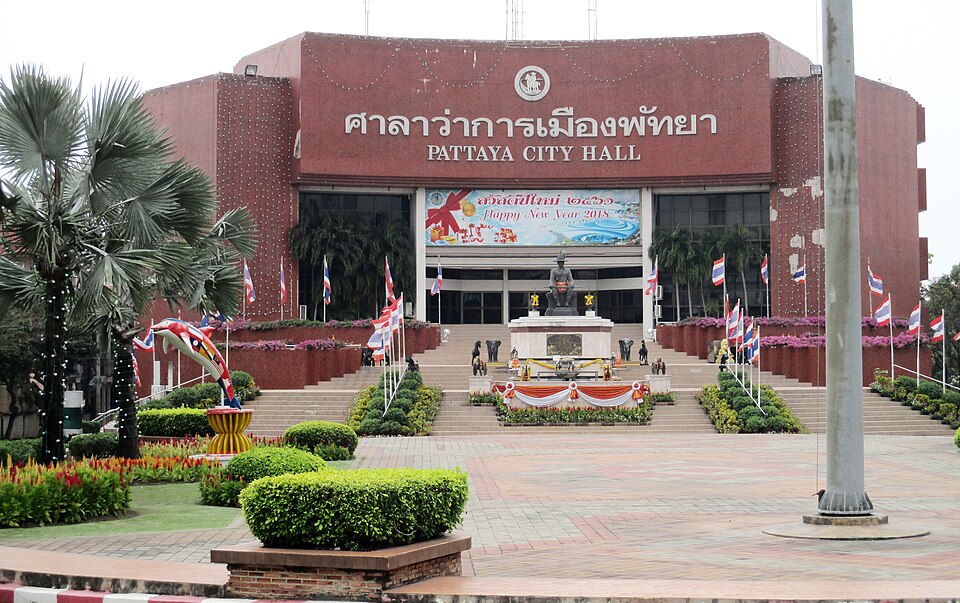
What Chonburi actually found
Of the 70 companies inspected in detail, 54 supplied an explanation of their ownership and 16 did not respond at all. Investigators rated 39 of the 70 high-risk and 31 low-risk. In Banglamung district alone — the district that contains Pattaya — 350 companies with foreign ownership hold land, and officials have identified a wider "nominee-risk" pool of more than 7,000 people and entities for further screening. All 70 detailed cases now sit with Thailand's Department of Special Investigation (DSI).
| Figure | What it covers |
|---|---|
| 14,264 | Companies in Chonburi province with foreign shareholding |
| 70 | Selected for detailed inspection, now referred to the DSI |
| 54 vs 16 | Companies that answered vs. gave no response |
| 39 vs 31 | Rated high-risk vs. low-risk after review |
| 350 | Foreign-linked companies holding land in Banglamung (Pattaya) alone |
| 7,000+ | People and entities in the wider nominee-risk screening pool |
The bigger picture: nationwide, not just Pattaya
Chonburi is only one of 16 provinces the Department of Business Development (DBD) has marked as high-risk for nominee structures, alongside Bangkok and its suburbs, Phuket, Chiang Mai, Chiang Rai, Surat Thani (Koh Samui's province), Krabi, Phang Nga, Prachuap Khiri Khan (Hua Hin) and Rayong — in other words, almost everywhere a Bangkok expat, someone enjoying Chiang Mai living or a Phuket digital nomad actually settles. Nationally, the DBD says high-risk company registrations have fallen from 894 a month last August to 163 this August, a drop of nearly 82%, while the Anti-Money Laundering Office has seized or frozen more than 20 billion baht in related assets. Roughly 14,000 companies are under investigation nationwide, tied to about 5,800 land plots worth an estimated 60 billion baht. Zoom out further and 36,277 foreign-invested companies hold over a million rai of land between them, and 7,082 hold more than 76,000 condominium units.
Foreign ownership itself is not illegal here. What officials are chasing is a Thai name on the share register with foreign money underneath it — and that describes a lot of holiday villas.
Why an existing Thai company is not automatically safe
Since 1 August, the DBD has required Thai shareholders and directors in flagged companies to hand over bank statements, so investigators can check the money they supposedly invested actually moved through their own accounts. Four patterns draw attention on their own: foreign shareholding sitting just under the legal cap, at 40–49.99%; token foreign stakes under 1%, which can mask real control through side agreements; a company that started out 100% Thai-owned and later added foreign shareholders; and a mismatch between a Thai partner's declared income and the amount they supposedly invested. None of this needed new legislation — it is already how the DBD is screening the roughly 120,000 companies it has flagged nationally for closer inspection.
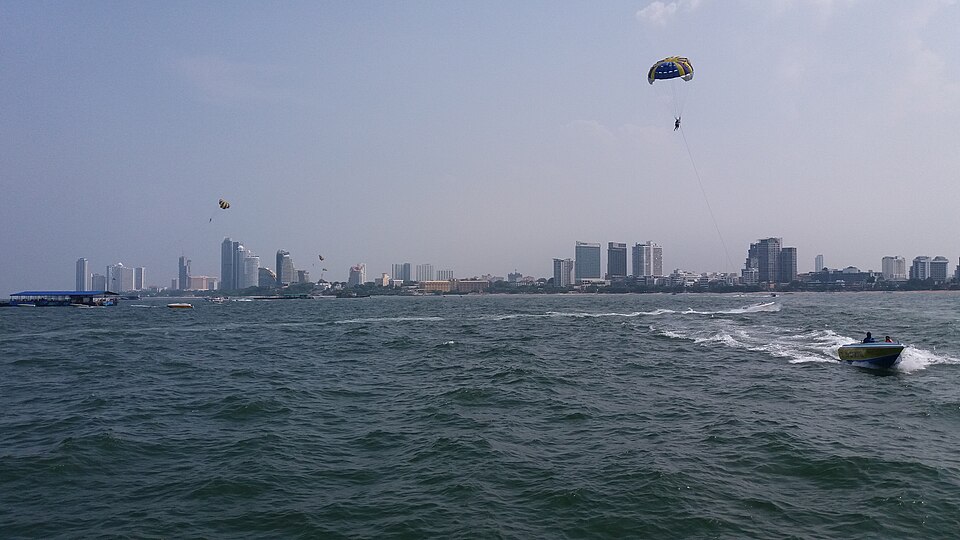
What it means if you're moving to Thailand for a villa or a small business
None of this makes foreign investment illegal, and officials keep repeating that point — legitimate capital is still welcome, especially in higher-value sectors. But "legitimate" now has to be demonstrable on paper, not just true in practice. If your Thai company already owns a house, a rai of land or a business, get shareholder agreements, bank transfer records and any loan paperwork between you and your Thai partners in order now, before a letter arrives. If you are only weighing this up, a long-term renewable lease, a Board of Investment-promoted structure, or one of the Thailand LTR visa categories built for property and investment are routes that do not rely on a nominee arrangement at all — worth pricing against whatever "company solution" is still being pitched. And if a Thai visa or work permit rides on that same company, remember the two are linked: a business under DSI investigation can freeze the paperwork an extension depends on.
We covered the wider rollback of foreign-business permission rules in Moving to Thailand? New Foreign Business Rules Explained, and our Non-B visa and work permit guide covers what a legitimate Thai company needs to sponsor you directly. For the honest trade-offs of where to put down roots in the first place, see our city guide comparing Bangkok, Pattaya, Phuket, Chiang Mai and Hua Hin.
Day to day, little changes for anyone whose paperwork is genuinely clean. Renting in Thailand, running a straightforward service business, or holding a condo within the 49% foreign quota were never the target of this review. What has changed is that Pattaya, like the other 15 flagged provinces, is now actually checking — and checking with the DSI, not just a form at the counter.
Key takeaways — 23 September 2026
- Chonburi flagged 14,264 companies with foreign shareholding; 70 face detailed DSI investigation, 39 rated high-risk.
- This is national, not local. 16 risk provinces cover Bangkok, Phuket, Chiang Mai, Koh Samui, Krabi, Hua Hin and more.
- Bank statements are now required. Since 1 August, flagged companies' Thai shareholders must prove their stated investment moved through their own accounts.
- Four red flags: shareholding just under 49%, token stakes under 1%, Thai-to-foreign ownership shifts, and income-to-investment mismatches.
- Foreign investment itself isn't illegal. Nominee structures that hide real control are the target.
- Your visa can be collateral damage. A company under investigation can hold up the work permit or extension tied to it.
Sources
- The Pattaya News, 20 September 2026 — Chonburi briefing figures, DSI referral, Banglamung land holdings
- The Thaiger, 22 September 2026 — 14,264 firms flagged, risk assessment breakdown
- The Nation Thailand, 16 July 2026 — DBD bank-statement requirement, the 16 risk provinces
- Thai Examiner, 11 September 2026 — national crackdown statistics, land and condo holdings
- Department of Business Development — company registration and nominee guidance
- Wikimedia Commons — Pattaya City Hall photo by Andrijko Z., CC BY-SA 4.0
- Wikimedia Commons — Pattaya skyline photo by Omio Asad, CC BY 3.0
This article is for information only and is not legal, tax or immigration advice. Company structuring rules and enforcement priorities can change without notice and are applied at official discretion. Check your specific situation with a licensed Thai lawyer or accountant, the Department of Business Development, or the Thai Immigration Bureau before acting. Verified 23 September 2026.