Thailand Visa-Free Stay Cut to 30 Days: What Changes
Fifty-nine countries keep visa-free entry at half the current length, two drop to 15 days and three lose it entirely. The measures await publication in the Royal Gazette and are not yet in force.
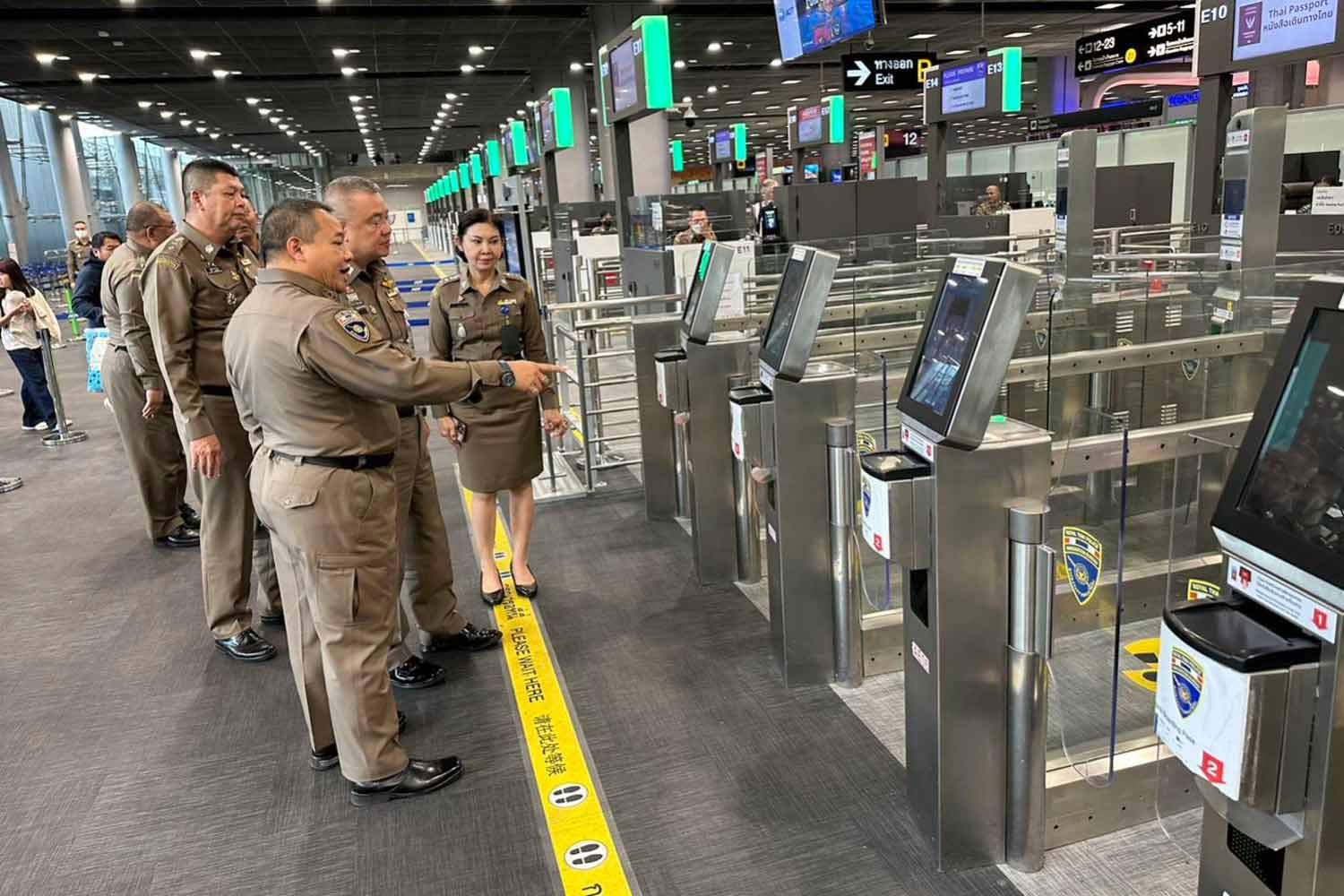
This article has been verified against official Thai government channels. Every figure below is checked against the Tourism Authority of Thailand announcement of 16 July 2026 and current Ministry of Foreign Affairs and Royal Thai Embassy guidance. The measures are not yet in force: the five Ministry of Interior announcements had not been published in the Royal Gazette as of this date, so the existing 60-day visa exemption still applies at the border. This page is re-verified whenever the Gazette publishes or official guidance changes.
Bangkok — Thailand's Cabinet has approved detailed rules that will cut visa-free stays for most nationalities from 60 days to 30, ending the unusually generous exemption introduced in July 2024 and replacing it with a three-tier structure covering 65 countries and territories.
The allocations, approved on 16 July 2026, follow a Cabinet decision in May to scrap the 60-day scheme in principle. They have not taken effect. The five related Ministry of Interior announcements remain unpublished in the Royal Gazette, and under the terms of the approval they come into force fifteen days after that publication occurs.
Until then, current entry conditions apply unchanged — a distinction that has been widely misreported. Travel agencies and expatriate forums have repeatedly described the change as already active since May.
A two-year experiment ends
The 60-day exemption was introduced in July 2024 as part of a push to accelerate tourism recovery, extending visa-free entry to 93 countries and territories and roughly doubling the previous standard allowance. It was among the most permissive short-stay regimes in Southeast Asia.
Officials have since attributed a range of problems to the scheme, including its use for purposes other than tourism — among them undeclared work, and long-term residence assembled from consecutive exempt entries rather than an appropriate visa. The stated aims of the revision are to close security gaps, curb misuse of tourist entry for non-tourism activity, and simplify a patchwork of overlapping entitlements.
The new structure returns most nationalities to a 30-day allowance, in line with regional norms, while reducing the number of countries covered by exemption from 93 to 59.
Three tiers, one entitlement each
The overhaul is built around a principle the Cabinet describes as "one country or territory, one entry category." Previously some nationalities could enter under overlapping arrangements — visa exemption, Visa on Arrival, or a bilateral agreement — which officials said complicated screening and made the privilege easier to misuse.
| Entitlement | Countries | Notable inclusions |
|---|---|---|
| 30-day visa exemption | 59 | All 27 EU member states, India, Croatia, Bulgaria, Cyprus, Malta, Maldives |
| 15-day visa exemption | 2 | Mauritius, Seychelles |
| Visa on Arrival | 3 | Azerbaijan, Belarus, Serbia |
Eligibility was assessed on economic factors, security assessments, international relations and reciprocity, according to the announcement. Separate bilateral agreements continue to operate alongside the new tiers, granting visa-exempt periods of 90, 30 or 14 days depending on the specific treaty — meaning the headline 30-day figure does not apply universally.
India gains as others lose
India is the clearest beneficiary. Indian nationals move from Visa on Arrival to 30-day visa exemption, removing both a fee and an arrival queue. Officials cited economic weight and trade ties, alongside a specific figure: Indian visitors stay an average of 7.17 days.
The inclusion of Croatia, Bulgaria, Cyprus and Malta brings all 27 EU member states into identical treatment. The announcement links this explicitly to ongoing discussions over Schengen visa exemption for Thai nationals — framing part of the overhaul as a reciprocity position rather than a purely domestic security measure.
Who is affected
For short-term visitors the change is largely academic: a 30-day allowance still exceeds a typical holiday. Holders of long-stay visas — the Destination Thailand Visa, Non-O retirement and marriage categories, the Long-Term Resident visa, Non-B work visas and the Thailand Privilege programme — are unaffected, as the announcements cover visa exemption and Visa on Arrival only.
The group most exposed is narrower: foreign nationals living in Thailand semi-permanently on consecutive visa-exempt entries, sustained through border runs and in-country extensions. Land-border entries under the exemption have been capped at two per calendar year for some time; halving the base allowance compounds that constraint.
Anyone who enters Thailand before the new measures take effect keeps the full duration of their existing permitted stay.
That transition protection creates a defined window. Travellers planning extended visa-exempt stays who arrive before the changeover retain the 60-day allowance for that entry. No effective date can currently be calculated, because the Royal Gazette publication date is not public.
Digital arrival records to be strengthened
Alongside the tier changes, the announcement commits security agencies to enhancing the Thailand Digital Arrival Card system to support traveller screening and verification of entry and exit records. Work is continuing to connect databases across agencies and to enable risk assessment before departure.
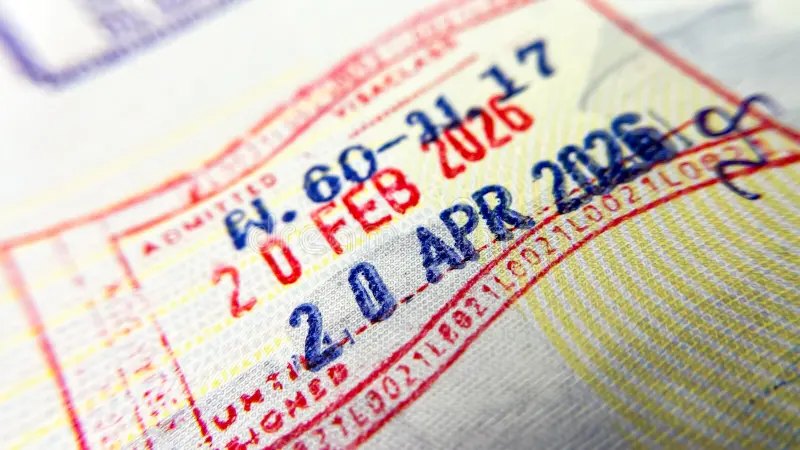
The practical effect is that immigration history becomes substantially more legible at the border, reducing reliance on manual inspection of passport stamps when officers assess repeat entries.
Entry under the exemption has always been granted at the discretion of the immigration officer rather than as an entitlement, and admission can be refused where an officer judges the pattern of travel inconsistent with tourism. Improved record-linking makes that judgement more consistent and harder to avoid by rotating entry points.
What travellers should do
Nationality-specific entitlements should be confirmed directly rather than inferred from the headline figure, given the three tiers and the overlay of bilateral agreements. Effective dates circulating online are speculative until Gazette publication. Those relying on repeated visa-exempt entry for long-term residence may wish to review formal long-stay categories, as the current change is the third tightening of short-stay entry in two years.
The Ministry of Foreign Affairs and Royal Thai Embassies and Consulates publish the binding guidance.
Sources — official Thai government channels
- Tourism Authority of Thailand — "Thai Cabinet approves updated visa measures pending Royal Gazette publication," Bangkok, 16 July 2026
- Royal Thai Government Cabinet resolutions, May and July 2026
- Ministry of Foreign Affairs of the Kingdom of Thailand — visa and entry guidance
- Royal Thai Embassy announcements on the revision of the visa exemption and Visa on Arrival schemes
- Royal Gazette — checked for publication of the five Ministry of Interior announcements; none published as of 1 August 2026
This article is for informational purposes only and is not legal or immigration advice. The measures described remain pending publication in the Royal Gazette and may change. Verify current requirements with the Thai Immigration Bureau, the nearest Royal Thai Embassy or Consulate, or a qualified immigration professional. Verified against official Thai government channels on 1 August 2026.