Thailand Visa: 30-Day Exemption Starts Monday
Two days out. Sixty countries keep a visa-free stamp, thirty-three lose one, and the number printed in your passport halves. Here is what actually changes at the counter.
Four Ministry of Interior notifications published in the Royal Gazette on 31 August take effect on Monday 15 September 2026. The 60-day visa exemption ends the same day. Anyone stamped in on or before 14 September keeps the permission already granted. Two days to go.
Bangkok — On Monday the most common Thailand visa in the country stops being a two-month document. The 60-day visa exemption that arrived in July 2024 is repealed, and in its place sit a 30-day exemption for 60 countries and territories, a 15-day exemption for two, and Visa on Arrival for three. If you fly in on Sunday you get 60 days. If you fly in on Monday you get 30. Same passport, same officer, different fortnight.
This has been coming since the Cabinet nodded it through in May, but the Gazette publication on 31 August is what made it real. Ninety-three eligible countries and territories become sixty. The rest fall back to a tourist visa, a bilateral arrangement, or nothing at all.
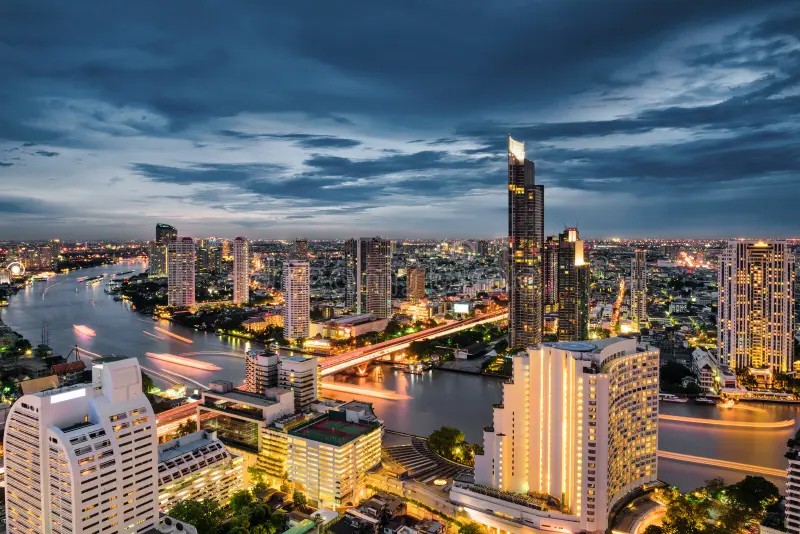
What the new Thailand visa exemption actually grants
The framework is simpler than the noise around it. Four buckets, one commencement date.
| Category | Who | Permitted stay |
|---|---|---|
| Visa exemption | 60 countries and territories, including the US, UK, Canada, Australia, Japan, Germany, France, India, Malaysia and Singapore | 30 days, tourism only |
| Visa exemption | Seychelles and Mauritius | 15 days |
| Visa on Arrival | Azerbaijan, Belarus, Serbia | Per VOA rules, fee payable |
| Bilateral agreements | Various, unchanged | 90, 30 or 14 days |
Two details get missed. First, India moves onto the 30-day exemption list rather than staying on Visa on Arrival — that is an upgrade, not a cut. Second, a bilateral agreement is not the same instrument as the unilateral exemption, so if your nationality has one, check it separately before assuming you are on the 60-country list.
The 1,900-baht extension is now part of the plan
Here is the part that keeps a 30-day stamp workable. The one-time extension of stay at any immigration office is unchanged: form TM.7, one photo, a copy of your passport pages and departure card, 1,900 baht in cash, and 30 more days. Thirty plus thirty is sixty, which is where you started — except now it costs a fee, a morning and a queue.
That is the honest arithmetic of this Thai visa change. The Kingdom has not halved anyone's stay. It has moved half of it behind a counter, where you can be looked at properly.
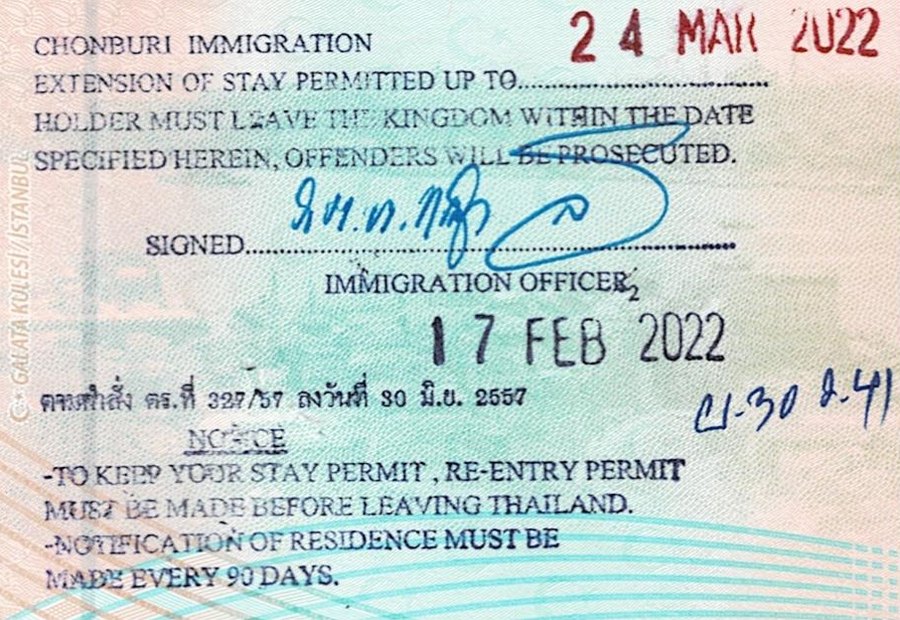
Thailand did not take thirty days away. It put them behind a 1,900-baht counter and a morning of your time.
Thai immigration rules at land borders: twice a year
Land crossings are where the real tightening lives. Under the new Thai immigration rules, most nationalities may use the 30-day visa exemption at a land checkpoint no more than twice per calendar year. Malaysians, Bruneians, Indonesians and Singaporeans are carved out, and the Minister can designate others.
The 15-day exemption carries the same land-border cap. Air and sea arrivals are not capped by this instrument — but nobody should read that as a licence for twelve consecutive exemption entries. Officers still exercise discretion, and a passport that shows a residency pattern with no visa behind it draws questions at secondary inspection.
Tourism only: no meetings on a visa exemption
The Gazette wording is explicit. The exemption is granted for tourism. Business and work-related activity are out, and that includes the quiet version — the conference badge, the site visit, the “just signing a contract” trip. If work is the purpose, the Thai visa requirement is a Non-B arranged in advance, not an explanation at the counter.
For anyone earning remotely from clients outside Thailand, this is the moment the DTV visa Thailand introduced in 2024 stops looking like a luxury. It is 10,000 baht for five years, 180 days per entry. Since 31 August the application must be filed through the Thai mission covering your nationality or permanent residence — temporary immigration status elsewhere no longer qualifies you to apply from that country.
Living in Thailand when the stamp is half as long
The cost of living in Thailand does not move on Monday. Friction does. A Bangkok expat on an exemption stamp now budgets a morning at Chaeng Watthana and 1,900 baht every second month, plus the border run or flight at the end of it. Two of those cycles a year already outrun the government fee on a proper long-stay route.
Renting in Thailand is where the mismatch bites hardest. A twelve-month lease in Sukhumvit, Nimman or Kata does not shrink because your entry did. Landlords have taken tourist-stamp tenants for years without blinking; expect more of them to ask which visa sits under the deposit, because the paperwork trail — TM30 filings, residence certificates, the bank account you cannot open without a Non-Immigrant page — is now visibly shorter than the tenancy.

If you are testing whether Chiang Mai, Hua Hin or Koh Samui is the best place to live in Thailand, run the test on a visa that survives the experiment. The Non-O retirement route for the over-fifties still wants 800,000 baht seasoned in a Thai bank for two months before the first application, or 65,000 baht a month in verified income. A Thailand retirement visa is paperwork-heavy and boring, and that is the point — it is the version of long stay that does not need renewing every fourth weekend.
The catches nobody puts on the group chat
First, proof of funds is not new, but it is newly visible when a scheme changes. Officers may ask for 10,000 baht per person for visa-exempt and Visa-on-Arrival entries, 20,000 baht for tourist and Non-Immigrant visas, roughly double per family. Keep a bank app open and an onward ticket handy.
Second, the Thailand Digital Arrival Card is still mandatory and still free. File within three days of arrival, every arrival, and file it yourself — the paid clone sites are pure margin.
Third, provincial variation is real. Chaeng Watthana in Bangkok is a get-there-early operation. Chiang Mai's Promenada office is calmer. Phuket and Pattaya track their tourist calendars. If your current stamp expires in late September, book the extension this week rather than in the queue after the rule change lands.
Fourth, Thailand healthcare for foreigners is not bundled with any of this. The exemption carries no insurance requirement, which sounds generous until a motorbike meets a pickup on Thepkrasattri Road.
Key takeaways — 13 September 2026
- Monday 15 September is the switch. Arrive on or before Sunday and you keep 60 days; arrive Monday and it is 30.
- Already inside? Nothing is clawed back. The date stamped in your passport stands.
- Budget the extension. TM.7, 1,900 baht, one time, 30 extra days at any immigration office.
- Land borders are capped. Two exemption entries per calendar year for most nationalities.
- Tourism only. Business activity needs a Non-B arranged before you fly.
- Check your own passport cover. Sixty countries is not ninety-three, and bilateral deals sit outside the list.
Uncle Pong's honest summary
Nobody is being thrown out on Monday, and the sky is not falling on tourism. What is ending is the accidental long stay — the arrangement where a visitor stamp quietly did the job of a residence permit for months at a time. Thailand has decided that people who live here should hold a visa that says so.
That is not unreasonable. It is just more expensive in time than the old way, and the moment a Thailand long stay involves two extension queues a year, the maths starts pointing at a real route instead.
Read the 30-day visa exemption rules to see how your nationality is treated, the DTV visa requirements if you earn from outside Thailand, or the Non-O retirement visa guide if you are over fifty. Then run the free Thailand visa finder — no sign-up, no commission, no agency pitch.
Sources
- TAT Newsroom — new 30-day and 15-day visa exemption rules, 1 September 2026
- Royal Gazette — Ministry of Interior notifications published 31 August 2026
- Thai Immigration Bureau — extension of stay, TM.7
- Thai e-Visa portal
- Thailand Digital Arrival Card
This article is for informational purposes only and is not legal or immigration advice. Rules are applied at officer discretion and vary by checkpoint. Verify against the Royal Gazette, the Thai Immigration Bureau or your nearest Royal Thai Embassy before you travel. Verified 13 September 2026.