DTV Visa Thailand: The Extension Is the Hard Part
The embassy said yes. That was the easy bit. Through 2026 the refusals have moved to the 180-day extension counter — and the most common one turns on a form your landlord was supposed to file.
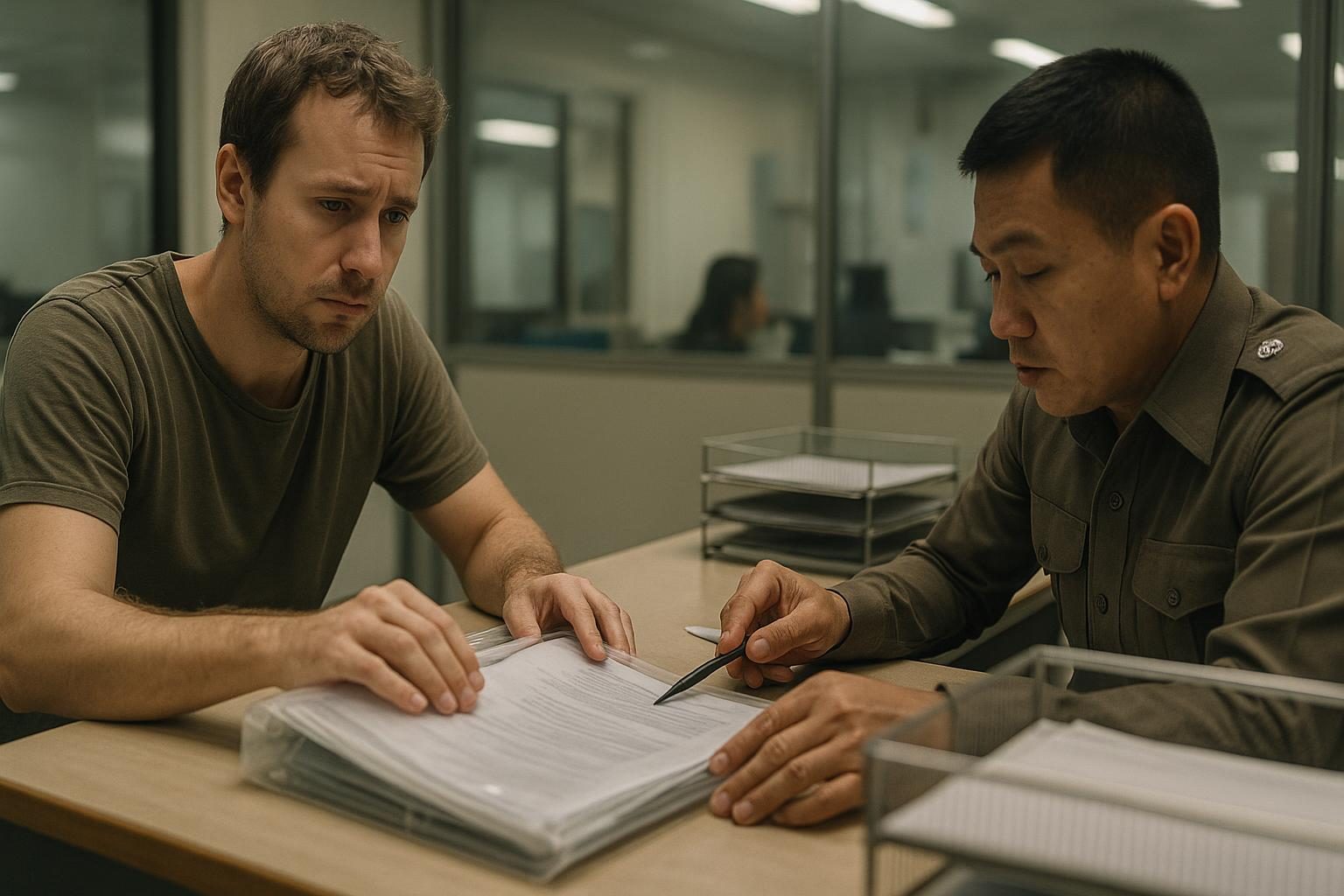
Nothing in the published DTV regulation has changed this month. What has changed is enforcement: which documents officers ask for, and how strictly they read them. Practice varies by immigration office and by officer — treat provincial guides, including this one, as a starting point and confirm with the office you will actually file at.
Chiang Mai — Getting the DTV visa Thailand issued is no longer the bottleneck most applicants expect. Embassies approve plenty of them, often inside a week. The trouble starts about six months later, at a desk in a Thai immigration office, when a five-year visa turns out not to guarantee a sixth month of stay.
Two things are happening at once, and they get muddled together in most write-ups. The visa itself was narrowed at the embassy end during 2026. Separately, the domestic extension process tightened. If you already hold the visa, only the second one affects you — and it is the one nobody warned you about.
What actually changed in the Thai visa requirement list
On the application side, the DTV visa Thailand soft-power route lost ground. General Thai language schools were dropped from the qualifying activity list during 2026; language study now belongs on an ED visa, not the DTV. Muay Thai, Thai cuisine, medical treatment, seminars and arts programmes remain in. Short one- to three-month "enrolment packages" bought purely to satisfy a Thai visa requirement are being refused more often than they are approved.
The 500,000 baht financial test also stopped being a snapshot. Embassies in Vientiane and Ho Chi Minh City in particular want to see three months of statements with that balance held throughout. A lump sum landing in the account the week before you apply is now among the most common single reasons for rejection.
Where Thai immigration rules bite: the 180-day extension
Each DTV entry gives you 180 days. You can extend once, in country, for another 180 — a 360-day continuous stay — then you must physically leave and re-enter to reset the clock. The extension fee is 1,900 baht on form TM.7, and processing typically runs three to seven days.
Here is the timing detail that costs people money. Do not aim for day 179. Chiang Mai practitioners advise filing between days 165 and 175, because your passport is retained while the file is processed and a late submission can run past your permitted stay while it sits in a queue. Miss the stamp date and you are on overstay at 500 baht a day, capped at 20,000 baht, with the record attached to your file permanently.
A five-year visa is not five years of stay. It is a five-year permission to keep asking, and each ask has its own paperwork.
The TM30 trap, and why renting in Thailand is now part of your visa
This is the failure mode worth reading twice. The TM30 is a residence notification filed by your landlord or accommodation provider, not by you. Immigration offices increasingly require it to be on the system, matching the address on your extension application, before they will look at anything else. Chiang Mai agents put TM30 and arrival-record mismatches at more than half of current extension rejections.
The practical consequence is that renting in Thailand and holding a visa are no longer separate problems. Before you sign a lease, ask the owner one question: have you filed a TM30 for a foreign tenant before? A condo owner who has done it for years is worth more to your visa than a slightly cheaper unit from someone who has never heard of the form. Re-filing after a landlord finally does it takes one to two days to sync, and there is no way to accelerate that from the queue.

The 500,000 baht question, where honest sources disagree
Read three guides and you will get three answers on money at extension time. The published requirement attaches to the visa application, not to the extension. In practice, several Thai immigration offices ask to see the 500,000 baht again when you file the TM.7, and some ask for statements covering the whole 180 days rather than a single recent one.
We cannot tell you the counter will always ask. We can tell you what it costs to be wrong: a rejected extension with your stay clock already inside its final fortnight. The safe plan is to keep the balance intact and untouched for the full period and bring statements at one, three and six months. If nobody asks, you have lost nothing but a printing fee.
Border bounce versus extension: the honest maths
Because it is a multiple-entry visa, leaving and returning resets the 180 days for free — no re-entry permit needed, no TM.7, no TM30 audit. A flight to Penang or a land crossing costs roughly 2,000 to 10,000 baht all in, which is more cash than the 1,900 baht extension but far less paperwork risk.
Most DTV visa Thailand holders who have done both say the same thing: the extension is cheaper on money and dearer on stress. If your TM30 is clean, your landlord is responsive and you hate flying, extend. If your housing situation is informal, sublet or short-term, bounce. And if you are stringing bounces together every 180 days, be aware that pattern is visible to immigration even though the DTV is not the target of the current entry crackdown.
What the DTV still will not do for you
Three limits people discover late. It does not authorise work for a Thai employer — overseas clients only. It is unreliable for opening a bank account, which we covered in detail in why your Thai bank account is the hard part of moving to Thailand. And staying past 180 days in a calendar year makes you Thai tax resident, which is a separate conversation from your visa and one worth having early.
You also still owe 90-day reporting on a DTV, extension or not, filed online or at your local office. It is not optional, and a missed report surfaces at exactly the wrong moment.
Key takeaways — 22 August 2026
- The published DTV rules have not changed this month. Enforcement of the existing ones has.
- Thai language schools no longer qualify under the soft-power route. That is an ED visa now.
- Season the 500,000 baht for three full months before applying. Late lump sums are the top rejection reason.
- File the extension between days 165 and 175, not day 179. Overstay is 500 baht per day, capped at 20,000.
- Confirm your landlord has filed the TM30 before you file anything. It is the single biggest cause of extension refusals.
- Keep the 500,000 baht intact during your stay. Offices differ on whether they check; the downside of assuming they will not is severe.
- A border reset is free and lower-risk than an extension if your housing paperwork is shaky.
The honest summary
None of this makes the DTV a bad route. On cost and validity the DTV visa Thailand offers is still the strongest digital nomad visa in Asia, and for anyone weighing Chiang Mai living against Bangkok expat life or the islands, five years of optionality is worth real money. The cost of living in Thailand has not moved much either; what has moved is the admin around it. Our full DTV guide lays out the eligibility side, and the city guide is the place to start on where to base yourself.
What has changed is where the effort sits. In 2024 the hard part was convincing an embassy. In 2026 it is staying compliant at a provincial counter over five years, which rewards boring virtues — a landlord who files forms, a bank balance you do not touch, a calendar reminder at day 160.
Verify at source before you act. The official Thai e-Visa portal for the application, and your own immigration office for anything about extensions. Anyone planning a DTV renewal from a forum thread written in 2024 is planning against rules that have quietly moved.
Sources
- Thailand Starter Kit / ExpatDen, "Destination Thailand Visa (DTV): Requirements and Application in 2026", updated 19 August 2026 — 500,000 THB three-month seasoning at Vientiane and HCMC, Thai language schools dropped from the qualifying list in 2026, rising rejection rates, extension scrutiny, embassy-by-embassy variation
- CMLocals, "DTV 180-Day Extension & Renewal in 2026: Complete Chiang Mai Guide", last verified May 2026 — days 165–175 filing window, 1,900 THB TM.7 fee, three-to-seven day processing, TM30 and arrival-record mismatches cited as the majority of extension rejections, 500,000 THB held through the stay
- Ministry of Foreign Affairs of Thailand, Destination Thailand Visa (DTV) information sheet — qualifying categories, 180 days per entry, five-year multiple-entry validity
- Royal Thai Embassy, Washington D.C. and the official Thai e-Visa portal (thaievisa.go.th) — application route, documentary requirements, visa fee
- Immigration Act B.E. 2522, section 37 — 90-day address reporting and residence notification obligations that apply to DTV holders
- Thai immigration overstay penalty schedule — 500 THB per day, capped at 20,000 THB, with the record retained on file
This article is for informational purposes only and is not legal or immigration advice. Requirements for the DTV visa Thailand differ by embassy, by immigration office and by province, are applied at officer discretion, and change without notice. Confirm current requirements with the Royal Thai Embassy or Consulate handling your application, or with your local Thai Immigration office, before making travel or relocation decisions. Verified 22 August 2026.