Thailand Visa: Three Days Into the 30-Day Era
The 60-day stamp is gone. Airports are issuing 30 days. Embassies cannot agree on DTV paperwork. And this afternoon the Prime Minister told governors to move faster against foreigners who break the law.
The new Thailand visa exemption has been live since Monday 15 September 2026. Stamps issued on or before 14 September still run to the date written in the passport. DTV applications filed from 31 August follow embassy-specific residence and police-clearance rules. Anutin's enforcement instruction to provincial governors was issued today.
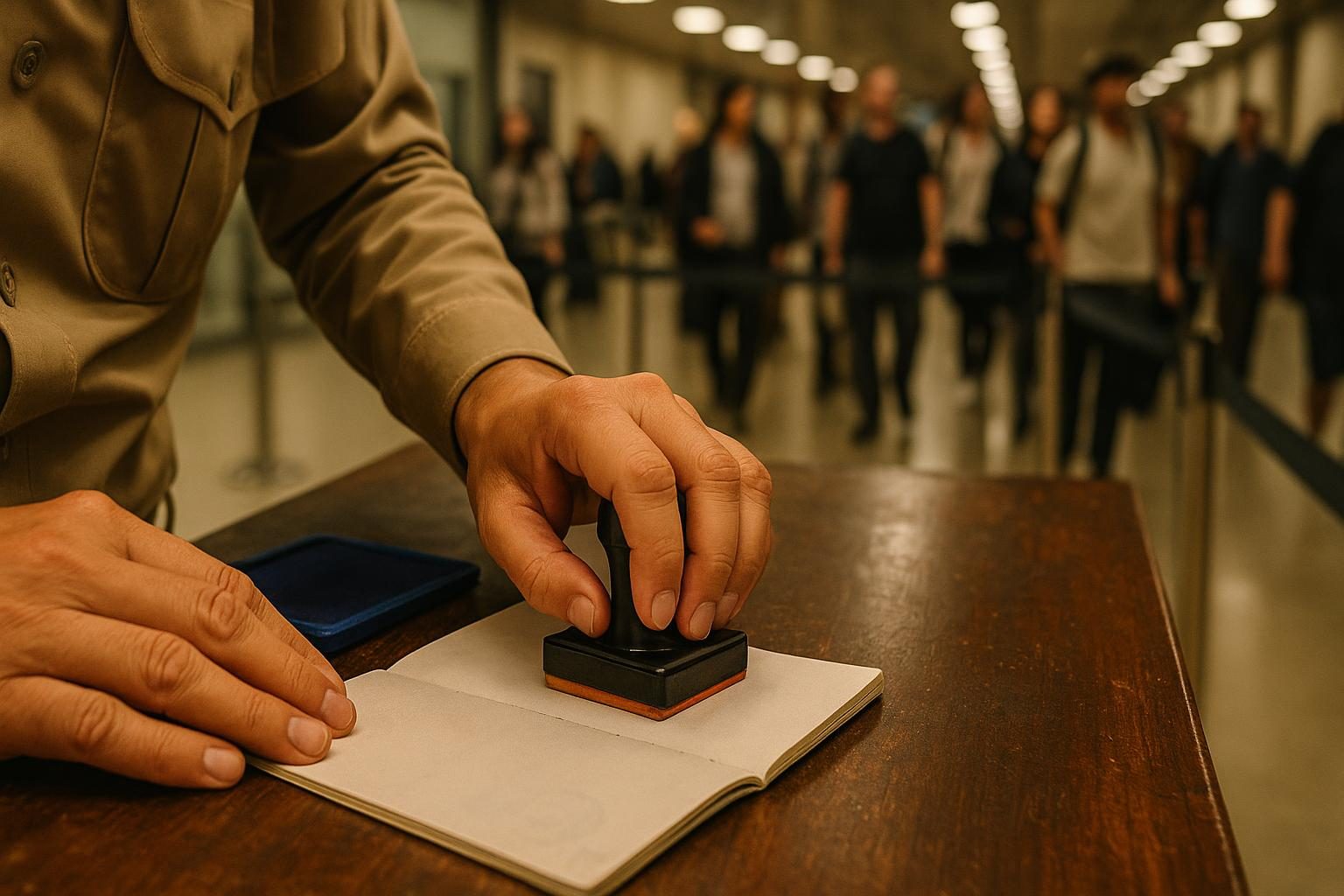
Bangkok — Three days after the new entry framework took effect, the change is no longer a Gazette notice. It is a handwritten date. Travellers landing at Suvarnabhumi and Phuket from Monday have been receiving 30 days, not 60. People already inside the country still hold whatever they were given. That split — old stamp, new landing — is the whole first week in one sentence.
The rest of this week is about what sits around that stamp: a DTV visa Thailand process that now differs by embassy, a land-border cap that ends the casual visa run, and a political signal from Prime Minister Anutin Charnvirakul that lawful foreigners stay welcome while anyone meeting deportation criteria should leave without a long argument about the ticket.
What the 30-day exemption is actually doing this week
The legal switch was clean. Four Ministry of Interior announcements published in the Royal Gazette on 31 August commenced on 15 September. Sixty countries and territories now enter visa-free for tourism for 30 days. Seychelles and Mauritius get 15. Visa on Arrival is limited to Azerbaijan, Belarus and Serbia. Twenty-one nationalities that used the old 60-day scheme now need a visa before they fly.
The catch nobody feels until they land is purpose. The exemption is tourism only. A conference badge, a factory visit or a contract signing is not tourism. Business travel needs a Non-B arranged before departure, not an explanation at secondary inspection. If you earn from clients outside Thailand and you are living in Thailand for months at a time, this is no longer a tourist problem. It is a route problem.
| If you… | What applies this week |
|---|---|
| Entered on or before 14 September | Keep the 60-day permission already stamped. Nothing is clawed back. |
| Entered from 15 September on a listed passport | 30 days, tourism only. One 1,900-baht TM.7 extension is available. |
| Plan a land-border hop | Most nationalities: two exemption entries per calendar year at land checkpoints. |
| Need to stay and work remotely | DTV, LTR or another Non-Immigrant route. The exemption is the wrong tool. |
DTV visa Thailand: one rule, many embassy versions
The Destination Thailand Visa is the route a lot of Bangkok expat and Phuket digital nomad households are now looking at. The bones have not moved: five years, multiple entry, 180 days per stay with one in-country extension, 10,000 baht government fee, and evidence of 500,000 baht held in a personal account.
What moved on 31 August is where you may apply and what you must show. The Department of Consular Affairs replaced proof of current location with proof of permanent residence in the country of the mission, and added a criminal-record clearance certificate. Applications paid in full before that date stay on the old document list. Everything after it does not.
Practice is already splitting. Vientiane wants Lao nationality or Lao permanent residence plus a police certificate from Laos or the applicant's own country. Ho Chi Minh City accepts a Vietnamese temporary or permanent residence card as long-term residence. Los Angeles treats a valid driving licence, a green card or a US visa with at least six months remaining as proof for some non-US applicants, and still lists a current-location document on the same page. Moscow's English and Russian pages do not say the same thing about who may file there.
That is the hidden cost of the DTV this month: not the 10,000 baht, but the weeks spent getting a police certificate that an embassy will actually accept, plus a flight home if you had planned to apply from a convenient third country. Read the mission page on the day you pay, not the Facebook post from July.
The DTV did not get harder on paper. It got slower, because every embassy is now writing its own version of permanent residence.
Thai immigration rules just got a political push
Today's news is not a new visa category. It is tone. Prime Minister and Interior Minister Anutin Charnvirakul told provincial governors to use their full legal powers against foreigners who commit crimes, exploit locals or intimidate people. Lawful residents remain welcome. People who meet deportation criteria should be removed without using an airfare dispute as a reason to wait.
Governors were also told to look harder at nominee shareholdings, illegal landholding, work-permit gaps and unlicensed short-stay properties operating like hotels. A separate Interior Ministry task force is reviewing citizenship applications and past nationality grants after investigations into nominee networks, with possible amendments to the Nationality Act of 1965 on the table.
If your papers are clean, this is not a raid on Chiang Mai living. It is a warning to anyone treating a tourist stamp as cover for a business, a bar or a house bought through a friend. The difference this week is that governors have been told not to stall.
Living in Thailand on the wrong stamp now costs more than money
Renting in Thailand on a 30-day exemption is still possible. It is a weaker story than it was last Sunday. A twelve-month lease in Ari, Nimmanhaemin or Rawai does not shrink with the stamp. Landlords who used to shrug at a tourist page are starting to ask which visa sits under the deposit, because TM30 filings and bank-account paperwork now look shorter than the tenancy.
The cost of living in Thailand did not jump on Monday. Friction did. Budget 1,900 baht and a morning at Chaeng Watthana, Promenada, Cherngtalay or Jomtien if you take the one-time extension. Budget a flight, not a land run, if you have already used both land-border exemption entries this calendar year. Malaysia, Brunei, Indonesia and Singapore are carved out of that cap; most other passports are not.
Thailand healthcare for foreigners is still not bundled with the exemption. More months in-country on a stamp that never asked for a policy is the quiet risk, not the fee.
What to do in the next seven days
First, photograph the permission page in your passport. The handwritten date governs you, not a headline. If that date is still in October because you entered before Monday, you have time to pick a real route instead of another exemption landing.
Second, if you are over fifty and planning to retire in Thailand, the Non-O financial tests have not moved: 800,000 baht seasoned in a Thai account, or 65,000 baht a month in embassy-attested income. Joint accounts are the usual trap. Plan for double if two people rely on the same book. That is a Thailand retirement visa problem, not a tourist-stamp problem, and it is the stable answer for that age group.
Third, if you need the DTV, start the police certificate from the country the mission will accept, and apply from the country where you are a national or permanent resident. Do not buy a weekend in Vientiane hoping the old third-country habit still works.
Fourth, file the Thailand Digital Arrival Card yourself at the official site before every arrival. It is free. Paid clone sites are margin dressed up as a Thai visa requirement.
Key takeaways — 18 September 2026
- The 30-day Thailand visa exemption is live. New landings get 30 days. Old stamps keep their original date.
- Tourism only. Business activity needs a Non-B arranged before you fly.
- One 1,900-baht extension still adds 30 days. After that you need a different route.
- DTV filings now follow the mission in front of you — residence proof and a police certificate, not a convenient third country.
- Anutin's order targets crime and nominee structures, not a clean retirement or remote-work file. Keep the file clean anyway.
- Land borders: two exemption entries a year for most nationalities. Do not spend one on a curiosity trip.
Uncle Pong's honest summary
Nobody was expelled on Monday because the number in the Gazette changed. What ended is the accidental Thailand long stay — the habit of treating a visitor stamp as a residence permit. The best place to live in Thailand is still the same list of cities it was last week. The stamp underneath the lease is what has to grow up.
If you are moving to Thailand this season, pick the route that matches the life you are actually living. Read the 30-day visa exemption guide for your nationality, the DTV visa requirements if you work for clients abroad, or the Non-O retirement visa page if you are fifty or over. Then run the free Thailand visa finder — no sign-up, no commission, no agency pitch.
Sources
- TAT Newsroom — 30-day and 15-day visa exemption rules in force from 15 September 2026
- Royal Gazette — Ministry of Interior notifications published 31 August 2026
- Department of Consular Affairs — DTV supporting-document change announced 28 August 2026
- Thai Immigration Bureau — extension of stay (TM.7)
- Thailand Digital Arrival Card
- Thaiger, 18 September 2026 — Anutin instruction to provincial governors; citizenship review
This article is for informational purposes only and is not legal or immigration advice. Rules are applied at officer discretion and vary by checkpoint and mission. Verify against the Royal Gazette, the Thai Immigration Bureau or your nearest Royal Thai Embassy before you travel or file. Verified 18 September 2026.