Living in Thailand: Who Really Needs Health Insurance
Half the internet says Thailand made health insurance compulsory for every arrival in 2026. It did not. Here is the rule that is actually enforced at the counter — and the one that is still sitting in a minister's in-tray.
There is no general health-insurance requirement to enter Thailand. The Ministry of Public Health proposal covering all visitors has not been approved by Cabinet, has not been published, and has no start date. The insurance rules that do bite are visa-specific and have been in place for years.
Bangkok — If you have been reading about living in Thailand this year you will have seen the headline a dozen times: health insurance is now mandatory for everyone entering the country. It is not, and the gap between what the aggregator sites publish and what an immigration officer actually asks for is wide enough to cost you money in both directions — buying cover you do not need, or arriving without cover you do.
The honest version takes two minutes to explain. One proposal is live but not law. Four visa categories carry a real, enforced insurance requirement. Everything else does not. If you are already living in Thailand on an extension processed inside the country, the odds are good that none of this applies to you at all.
What the Ministry of Public Health actually proposed
On 1 May 2026, Public Health Minister Pattana Promphat said the ministry was still considering compulsory health insurance for all foreign arrivals — tourists, migrant workers and short-stay visitors alike. The driver is money: the ministry puts unpaid hospital bills left by uninsured foreign patients at roughly 100 million baht a year, concentrated in Phuket, Chiang Mai and the border provinces where a patient's legal status often cannot be verified before treatment begins.
The minister said he intended to take the proposal to Cabinet during the current government's term. That is where it still sits. No draft regulation has been published, no Royal Gazette announcement exists, and no implementation date has been named. A separate tourist tax on air arrivals is travelling through the same pipeline and is equally unapproved.
Readers of this site will recognise the pattern. It is the same one we tracked through the visa exemption changes: Cabinet-level noise gets reported as a rule in force months before it becomes one, and sometimes it never does.
Thailand healthcare for foreigners: what is mandatory today
Here is the part worth printing. As of today, these are the Thai visa requirement thresholds for medical cover, and they have not moved this year.
| Route | Insurance required? | Minimum cover | The catch |
|---|---|---|---|
| Non-OA long stay (age 50+, applied for abroad) | Yes | USD 100,000 / 3,000,000 THB per policy year | Follows the visa, not you. You keep proving it at every renewal until you leave and re-enter on a different status. |
| Non-O-X long stay (10-year, age 50+) | Yes | 40,000 THB outpatient and 400,000 THB inpatient | Must run for the full duration of stay, not the policy year you happen to be in. |
| LTR (all four categories) | Yes | USD 50,000 per year, or a USD 100,000 deposit, or Thai social security cover | The deposit alternative is real and is often cheaper than a policy for anyone over 70. |
| Non-O retirement (extended inside Thailand) | No | — | The single most expensive misunderstanding in this table. See below. |
| Tourist, visa exemption, DTV, ED, Non-B, volunteer | No | — | Individual embassies can still ask. The e-Visa portal will tell you if yours does. |
For the Non-OA and O-X routes you also need a completed Foreign Insurance Certificate, signed and stamped by the insurer, filed alongside the policy itself. A policy document on its own is regularly rejected. Thai insurers issue the certificate as routine; foreign insurers often have never heard of it, and chasing one out of a European underwriter in August is a fortnight you did not budget for.
Insurance is not a Thai visa requirement. It is a requirement of four specific Thai visas, and most people applying do not hold any of them.
The Non-O confusion that costs retirees real money
This is the one worth reading twice if you plan to retire in Thailand. The 3,000,000 baht insurance rule attaches to the Non-OA visa issued by an embassy abroad. It does not attach to the Non-O retirement extension processed inside Thailand, which is the route most long-stayers actually end up on.
Both are commonly described as "the Thailand retirement visa", and plenty of agencies quote the Non-OA insurance figure to Non-O applicants. Applicants over 60 have bought policies costing 80,000 to 200,000 baht a year to satisfy a rule that did not apply to them. Nobody at the counter will tell you that you overpaid, because nobody at the counter asked for it.
None of which means going bare is smart at 65. It means choosing cover on medical grounds and your own budget, not because a website told you immigration would demand it.
Where you live changes the bill more than which visa you hold
The cost of living in Thailand conversation usually stops at rent and food. Healthcare is the line that moves most between cities, and it deserves a place in the decision about the best place to live in Thailand.
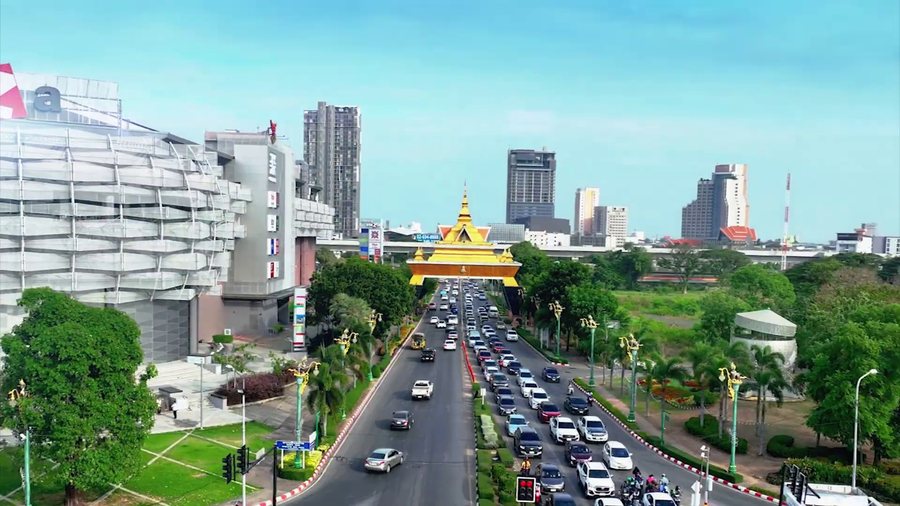
A Bangkok expat using an international private hospital can expect Western-adjacent pricing: a straightforward appendectomy runs into six figures in baht. The same procedure at a provincial general hospital is a fraction of that. Chiang Mai living sits between the two, with a strong private sector and lower list prices. Phuket digital nomad life is the awkward case — island pricing, heavy tourist demand, and the province the ministry names most often when it talks about unpaid bills.
The practical variable is direct billing. In Bangkok and Chiang Mai, most international insurers have arrangements that let the hospital bill them directly. In smaller provinces you will often pay up front and reclaim, which means keeping five or six figures of baht liquid — a point that connects straight back to getting a Thai bank account open in the first place.
What cover actually costs, and the age cliff
Rough annual premiums for a policy that meets the Non-OA threshold: around 35,000 to 60,000 baht at 50, 60,000 to 120,000 baht at 60, and 150,000 baht upwards at 70 where any insurer will still write new business at all. Thai medical inflation is running near 11% for 2026, so treat last year's quote as optimistic.
Two things catch people out. Pre-existing conditions are excluded far more aggressively by Thai-market policies than by the international plans most arrivals are used to. And several insurers will not issue a new policy above 70–75, which makes the sequencing brutal: if you intend to be living in Thailand long term on an insured route, buy in before the cliff, not after.
Key takeaways — 27 August 2026
- Mandatory insurance for all arrivals is a proposal, not a rule. No Cabinet approval, no Gazette, no date.
- Non-OA needs USD 100,000 cover; Non-O extensions need none. Confusing the two is the most expensive error on this page.
- O-X requires 40,000 THB outpatient and 400,000 THB inpatient for the whole stay.
- LTR accepts a USD 100,000 deposit instead of a policy — often the cheaper option after 70.
- The Foreign Insurance Certificate is a separate document. Start it early with a non-Thai insurer.
- Direct billing is a city question, not a visa question. Outside the big centres, expect to pay and reclaim.
- Buy cover before 70 if you can. New policies get scarce and dear after that.
The honest summary
Thailand is not about to bar uninsured tourists at the airport next month. It may well get there eventually — the unpaid-bill problem is real and the political appetite is visible — but it will arrive through Cabinet and the Royal Gazette with notice, as these things always do. Until then, ignore the headlines and check your own route.
For most people weighing a move, that is a small relief and a bigger prompt. Thai immigration rules are not the reason to buy health insurance. Your age, your medical history and the province you settle in are. Our city guide covers the practical differences between the main hubs, and the LTR wealthy pensioner route is worth a look if you are insured anyway and want ten years of certainty.
Verify at source before you buy anything. The Ministry of Foreign Affairs route pages set the thresholds, the BOI's LTR portal sets the LTR terms, and your own insurer confirms whether it will issue the certificate Thailand asks for. An agency quoting you a premium is not a source.
Sources
- Statement by Public Health Minister Pattana Promphat, 1 May 2026, following the Ministry of Public Health's 2026–2030 policy direction — proposal for mandatory health insurance covering tourists, migrant workers and short-stay visitors; roughly 100 million THB in annual unpaid foreign-patient bills; Phuket, Chiang Mai and border provinces named; Tor 99 welfare scheme to continue; intention to submit to Cabinet
- Ministry of Foreign Affairs of Thailand, Non-Immigrant Visa "O-A" (Long Stay) — USD 100,000 / 3,000,000 THB insurance threshold, medical certificate and prohibited-disease list
- Ministry of Foreign Affairs of Thailand, Non-Immigrant Visa "O-X" (Long Stay, 10 years) — 40,000 THB outpatient and 400,000 THB inpatient minimums for the duration of stay
- Thailand Board of Investment, Long-Term Resident (LTR) visa portal — USD 50,000 annual cover, USD 100,000 deposit alternative, social-security equivalence
- Thai General Insurance Association long-stay portal — Foreign Insurance Certificate required alongside the policy for O-A and O-X applications
- Official Thai e-Visa portal — per-mission documentary requirements, including any embassy-specific insurance conditions
- Pacific Prime Thailand, "Mandatory Health Insurance For Expats In Thailand", updated July 2026 — category-by-category summary of which visa classes are exempt from insurance requirements
- Industry reporting on Thai medical cost inflation for 2026 (approximately 10.8%) — used for the premium-trend guidance above
This article is for informational purposes only and is not legal, immigration, insurance or medical advice. Premium ranges are indicative and depend on age, history and insurer. Requirements differ by embassy, by immigration office and by province, are applied at officer discretion, and change without notice. Confirm current requirements with the Royal Thai Embassy or Consulate handling your application, or with your local Thai Immigration office, before making decisions about living in Thailand. Verified 27 August 2026.