Flood Relief Package: What Expats Can Claim
The cabinet has added 10.51 billion baht for flood-hit households. If you are living in Thailand, the headline is simple. The useful part is who can actually claim, what the loans cost you later, and what to check on your lease, insurance and paperwork before the next surge.
This is a cabinet relief package, not a visa change. No Thai visa or immigration rule has changed. Figures come from Xinhua and The Star (Bangkok Post/ANN) reports of the 20 October cabinet decision. The reports do not say whether foreign residents qualify, so we flag that gap rather than guess.
Bangkok — Living in Thailand means sooner or later dealing with the water. On 20 October the cabinet approved an extra 10.51 billion baht, about US$312 million, to compensate roughly 1.48 million households hit by floods since September. More than two million households have applied for a combined 15.8 billion baht, so claims have already outrun the first budget.
What the Thai cabinet approved
The money is on top of 4.7 billion baht approved on 29 September for victims in 66 provinces and Bangkok. The government says it has paid out more than 5 billion baht so far. The new funds are meant for applications still being verified, and officials say checking time has been cut to two days.
Beyond cash, there is a bundle of credit and tax measures. State lenders are offering debt moratoriums, lower interest and longer repayment terms. There are low-interest loans to repair or rebuild homes, plus emergency loans with an initial interest-free period.
The tax and business side
Individuals can claim an income tax deduction for home and vehicle repairs. Filing and payment deadlines for revenue and excise taxes are extended in affected areas. Businesses get low-interest working capital, temporary credit-line top-ups, suspended loan-guarantee fees and a government-backed soft-loan scheme for small firms. Import duties are waived on replacement machinery for flood-hit factories and hotels.
The reports give no exact new tax deadlines, per-household payment amounts or interest rates. Treat any figure you see on social media with suspicion until it appears on a government or bank page.
The catch nobody mentions: a moratorium pauses payments, it does not erase the debt.
Can foreigners claim? The honest answer
Here is what we do not know. The reports do not say whether foreign residents are eligible for household compensation. Compensation schemes in Thailand have usually been built around Thai registered households, and loans from state lenders generally require Thai ID documents. That is our reading of how such schemes tend to work, not something the cabinet statement confirms.
So do not plan around a payout. If you own a home through a Thai spouse or hold a registered house book entry, ask your district office what applies. If you are a renter, assume the landlord, not you, is the claimant for the building.
Renting in Thailand: where flood costs land on you
Renting in Thailand is the most common expat setup, and flooding exposes the weak points in a lease. Many contracts say nothing about water damage, lost belongings or a flooded road that keeps you from your home for days.
Before you sign or renew, ask for three things in writing: whether the building or street has flooded before, who pays for repairs to fixtures, and whether rent pauses if the unit is unusable. In a soft rental market, which we covered in our Bangkok condo glut report, you may have more room to negotiate than you think.
Insurance: the cost of living in Thailand nobody budgets
Cost of living in Thailand figures usually cover rent, food and transport. Contents insurance rarely appears. A relief package will not replace a laptop, a motorbike or your savings tied up in furniture. Our guide to disaster insurance for Thai homes explains the cover on offer, and you should read the flood clause line by line, because some policies exclude it or cap it low.
Health matters too. Waterborne infections and injuries are the obvious risk, and Thailand healthcare for foreigners is only as good as your policy, as our piece on rejected insurance claims shows.
Where you live changes the risk
The best place to live in Thailand depends partly on drainage. A Bangkok expat in an upper-floor condo may keep dry but lose lifts and pumps. Chiang Mai living has seen river flooding before, so check how close a rental sits to the water. Phuket and the islands face fast runoff after heavy rain. Our city guide compares the main hubs for expats.
One more reminder: a damaged home does not change your permission to stay. Whatever your Thai visa requirement, whether a DTV, a retirement extension or a marriage visa, deadlines for 90-day reporting and extensions keep running. Keep passport copies and your latest immigration slips in a waterproof pouch.
Your flood-readiness checklist
- Photograph your home and belongings now, with dates, for any insurance or compensation claim.
- Ask your landlord in writing about flood history, repair responsibility and rent during an outage.
- Read your insurance policy for flood cover and caps, and buy contents cover if you have none.
- Ask your district office whether foreign residents can register for relief; do not assume.
- Treat state loans as debt, and compare interest rates and repayment terms before accepting.
- Pack a go-bag with passport, visa documents, medicine and cash.
- Watch official channels for the exact tax-deadline extensions in your province.
Living in Thailand key takeaways — 21 October 2026
- The package is big: 10.51 billion baht extra for about 1.48 million households, on top of 4.7 billion baht from 29 September.
- Foreign eligibility is unconfirmed. Do not budget around a payout.
- Loans and moratoriums are debt, not grants. Read the terms.
- Renters should negotiate flood clauses and rent-pause terms in writing.
- Visa duties continue after a flood. Keep documents dry and copied.
Sources
- Xinhua — Thailand approves extra fund for flood victims (20 October 2026)
- The Star (Bangkok Post/ANN) — Thailand approves extra funds for flood victims (21 October 2026)
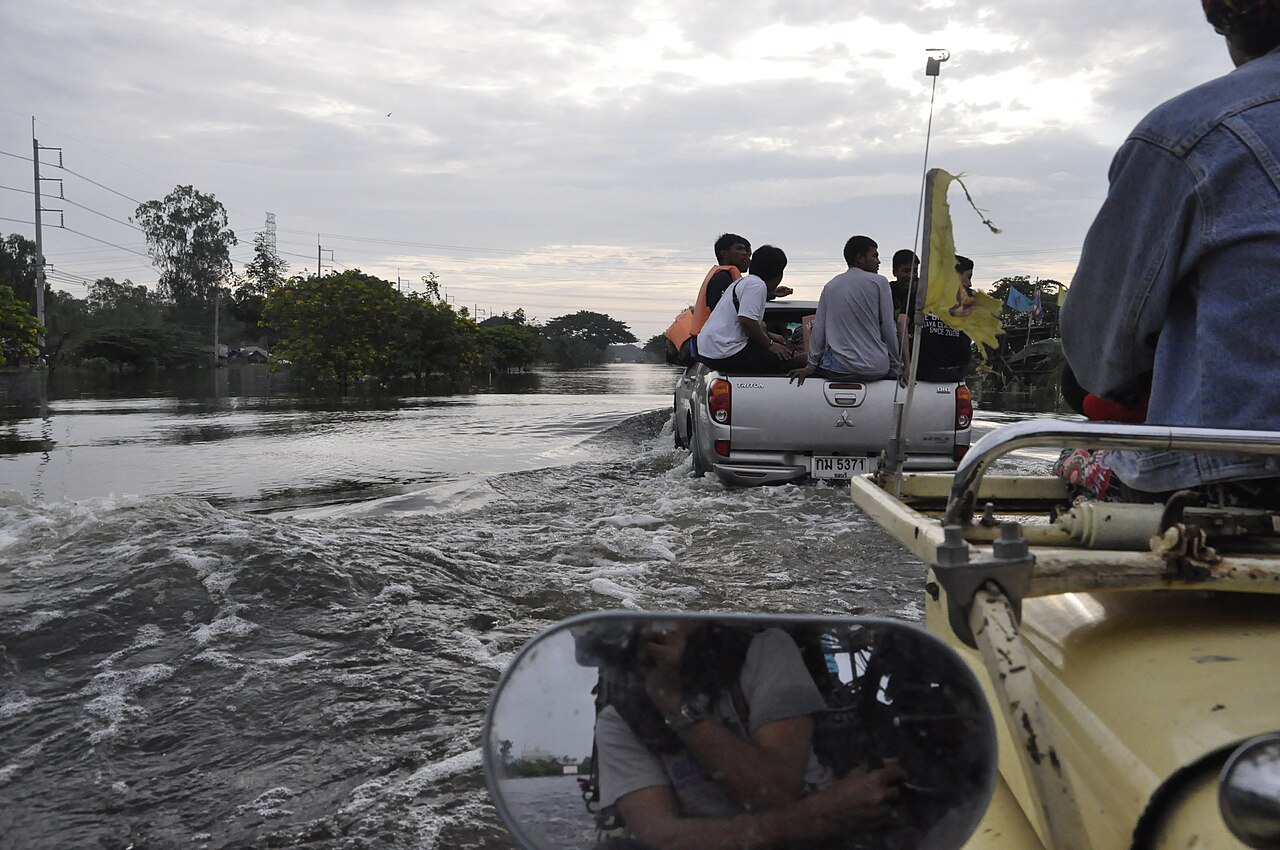
- Wikimedia Commons — Ayutthaya Floods, October 2011, CC0 (resized)
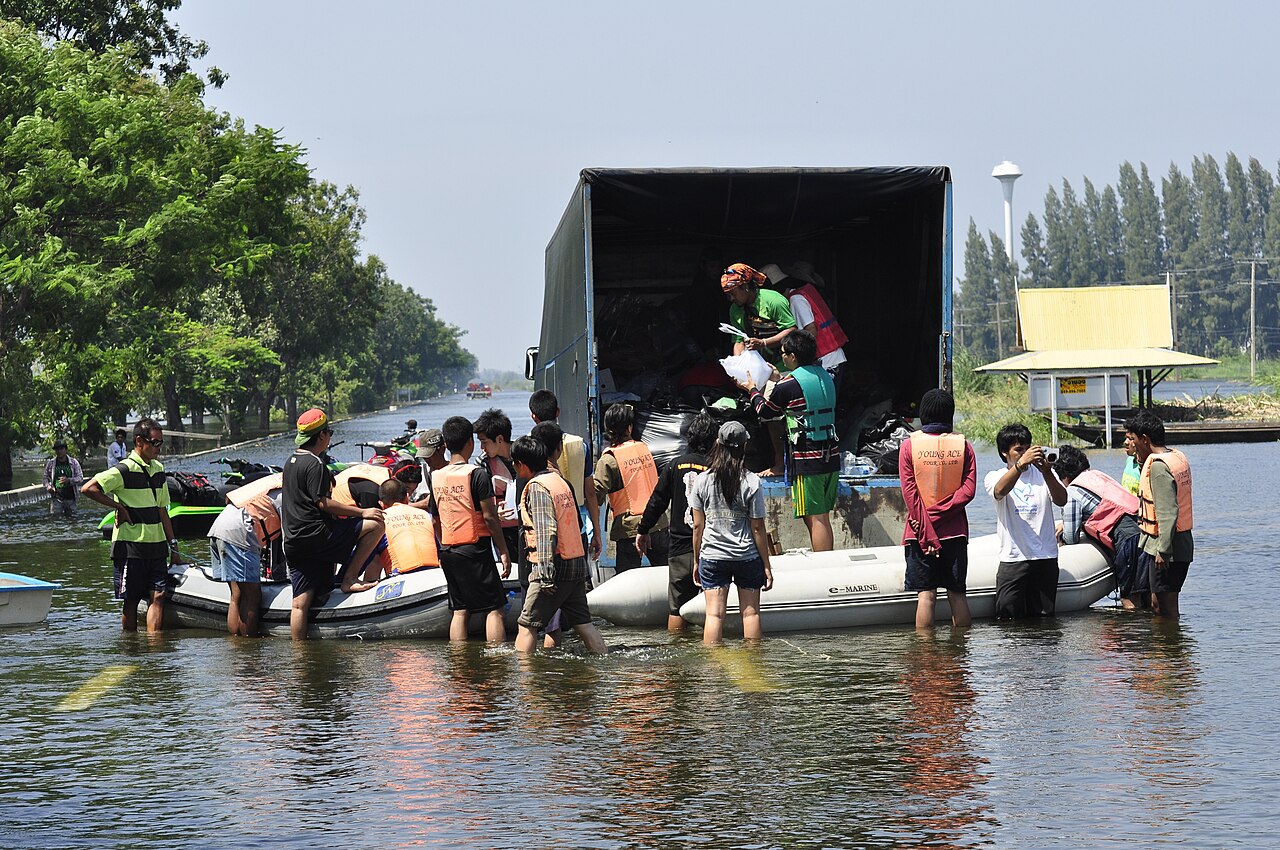
- Wikimedia Commons — Volunteering, October 2011, CC0 (resized)
This article is for information only and is not legal, financial or insurance advice. Relief eligibility depends on your circumstances and province; confirm with your district office or lender. Verified 21 October 2026.
Related reading
Source: Xinhua — Thailand approves extra fund for flood victims (20 October 2026)