Thai Visa Runs Are Over: What Immigration Checks Now
Nearly 30,000 foreigners were refused entry in the first five months of 2026. The rules barely moved — the reading of them did. If you have been living in Thailand on tourist stamps, the arithmetic has changed.
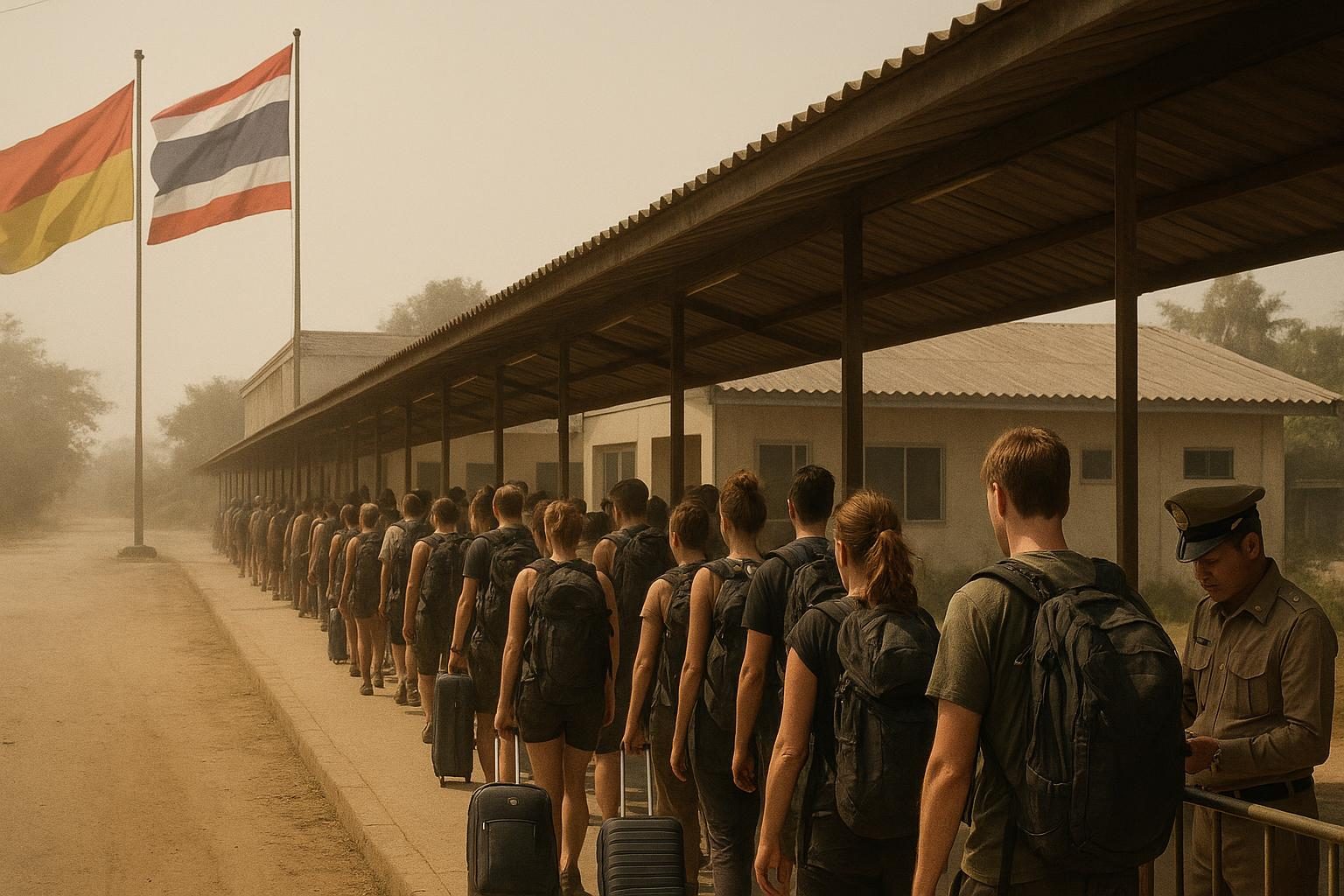
This article describes enforcement practice, not a new law. No statute has been rewritten. The visa-exemption periods currently in force are unchanged: the Cabinet-approved cut to 30 days has still not been published in the Royal Gazette as of this date, and takes effect 15 days after it is. The land-border cap of two visa-exempt entries per calendar year has been in force since late 2025. Verify at immigration.go.th before you travel.
Bangkok — For a decade, a certain kind of Thai visa strategy worked: arrive on a visa exemption, stay until the stamp expired, cross to Cambodia or Laos for lunch, come back the same afternoon. Nobody wrote it down as a plan. Thousands of people lived on it anyway. In 2026, it is failing — and most people are discovering that at the counter, with luggage.
What makes this story awkward to report is that almost nothing was announced. The Thai visa requirement for a tourist arrival reads the same as it did two years ago. The change is that immigration officers no longer assess your entry in isolation. They look at the whole passport, and at what your pattern of entries says about where you actually live.
The numbers behind the Thai visa crackdown
The Immigration Bureau has given its campaign a name — "No Entry, No Stay, No Escape" — and, unusually, some figures. Between January and May 2026, officers denied entry to 29,490 foreign nationals. More than 169,000 names now sit in the Advance Passenger Processing System, which screens passengers before they board, meaning many refusals happen at a check-in desk abroad rather than at Suvarnabhumi.
Inside the country, the same campaign revoked 668 education visas found to be covering illegal work, and arrested more than 14,000 overstayers and unlicensed workers for deportation.
For scale: officers had turned away roughly 2,900 people for suspicious entry patterns across the whole of the preceding period before the campaign escalated. The order of magnitude is the story.
Nothing in the law changed. What changed is that somebody is now reading the stamps.
Thai immigration rules at the land border: the two-entry cap
The one genuine rule change sits at the land crossings. Since late 2025, visa-exempt entries by land have been capped at two per calendar year. Fly in and the cap does not apply in the same way — but your history still does, and a passport showing six air arrivals and no visa in eighteen months invites the same questions.
Provincial immigration offices were separately instructed to refuse extensions, and in some cases to shorten or cancel existing permitted stays, where the file suggests visa-run behaviour. That is the part long-stay foreigners underestimate. It is not only an airport risk; it is a risk at the office where you have been extending for years.

Who immigration is actually targeting
The Bureau has been consistent on this, and it is worth repeating honestly rather than dramatically: a visitor making one or two trips a year has nothing to worry about. The campaign is aimed at people chaining tourist entries together to live, work or run a business without the matching permission — a pattern that also shelters call-centre scam operations, which is why the political appetite for enforcement is unusually high.
The problem is that "living quietly in Chiang Mai on back-to-back stamps" and "running a fraud operation" produce a similar-looking passport. The screening does not distinguish intent. It distinguishes pattern.
The catches nobody mentions
A refusal is not a re-route. Denial of entry means detention until you pay for your own return ticket. That cost lands on you, at short notice, at airport prices.
The stamp follows you. A refusal mark makes subsequent entries harder for years, including on a perfectly legitimate application later. People underestimate how much a single bad crossing narrows their options.
Provincial variation is real. A Bangkok expat filing at Chaeng Wattana and someone renting in Thailand's northeast filing at a small provincial office will not get identical treatment. Chiang Mai living and Phuket digital nomad hubs both have offices with local practice on what documentation satisfies them. Ask locally before you assume.
The tax line moves with you. Spend 180 days or more in a calendar year here and you are a Thai tax resident, whatever stamp you used to get in. People restructuring their entries to look legitimate sometimes walk straight into a filing obligation instead.
The legal routes that still work
None of this makes Thailand long stay harder in principle. It makes the informal version harder. Every formal Thai visa route is still open, and cheaper than most people assume once you stop paying agents to explain them:
- DTV visa Thailand — five-year validity, 180 days per entry, extendable another 180 in-country. Requires 500,000 baht held in your own account for three months. Rejections cluster around freshly deposited funds and vague freelance evidence, so build the paper trail early.
- Thailand retirement visa — 800,000 baht in a Thai bank, or 65,000 baht monthly income, or a combination. Straightforward if you are over 50 and organised.
- Marriage, family and LTR routes — lower financial bars in some cases, more paperwork in others. Worth checking before defaulting to the retirement option.
Health cover is the piece people leave until last. Thailand healthcare for foreigners is excellent and, by Western standards, reasonable — but O-A and O-X applicants face specific minimum insurance requirements from Thai-licensed insurers, and those are checked.
Key takeaways — 9 August 2026
- Enforcement changed, not the law. Officers now read your full entry history, at airports and land borders alike.
- Two land-border visa-exempt entries per calendar year. In force since late 2025.
- 29,490 refusals in five months. A refusal means detention until you fund your own departure.
- The 60-to-30 day cut is still not law. It takes effect 15 days after Royal Gazette publication, which has not happened.
- Get the Thai visa that matches your life. DTV, retirement, marriage and LTR all exist for a reason, and none of them require an agent.
The honest summary
It would be easy to write this as a panic. It is not one. The cost of living in Thailand is still among the best value in Asia, the healthcare is still good, and the question of the best place to live in Thailand still has more good answers than most countries manage. Read our city guide if you are weighing Bangkok against Hua Hin against Khon Kaen.
What has ended is the grey zone. Thailand spent years tolerating an arrangement it never formally permitted, and has now decided to stop — without changing the rulebook, which is why so many people have been caught out. If your stay depends on nobody looking closely, you no longer have a plan. You have a bet.
The fix is unglamorous and, for most people, affordable: hold the Thai visa that matches what you are actually doing here, keep the paperwork honest, and verify at source rather than in a forum thread. See our visa exemption briefing for where the 30-day change currently stands.
Sources
- Thai Government Public Relations Department, 6 June 2026 — Immigration Bureau "No Entry, No Stay, No Escape" campaign announcement
- Immigration Bureau figures, January–May 2026 — 29,490 entries denied; 169,506 names in the Advance Passenger Processing System; 668 education visas revoked; 14,161 overstayers and illegal workers arrested
- Immigration Bureau spokesperson Pol Maj Gen Choengron Rimphadee — statement that visitors making one or two trips a year are not the target of the campaign
- Thai immigration measures, late 2025 — cap of two visa-exempt land-border entries per calendar year; instructions to provincial offices on refusing extensions where visa-run patterns are detected
- Thai Cabinet decision, 19 May 2026 — 60-day visa exemption revoked for 93 countries and territories; 30-day exemption for 54, 15-day for three; effective 15 days after Royal Gazette publication, unpublished as of 9 August 2026
- Ministry of Foreign Affairs / Royal Thai Embassy guidance — DTV validity, 180-day permitted stay and 500,000 baht financial evidence; Non-O retirement financial thresholds of 800,000 baht or 65,000 baht monthly income
- Thai Revenue Department — 180 days of presence in a calendar year establishes Thai tax residency
This article is for informational purposes only and is not legal or immigration advice. Requirements vary by nationality, visa category and port of entry, and provincial immigration offices apply discretion. Verify current requirements with the Thai Immigration Bureau or a qualified Thai immigration professional before you travel. Verified 9 August 2026.