Thai Visa: Already Here When the 60-Day Stamp Ends
Tuesday is not a reset. If you are already inside the Kingdom, the date printed in your passport still wins. The trap is the next landing, not this one.
Four Ministry of Interior notifications published in the Royal Gazette on 31 August take effect on 15 September 2026. TAT and the Foreign Ministry have confirmed the change is not retroactive. Anyone admitted on or before 14 September keeps the permission already stamped. Four days to go.
Bangkok — The most useful Thai visa fact this weekend is also the least circulated. If you are already in the country, 15 September does not shorten your stay. The officer who stamped you last week is not coming back to collect thirty days. The new rule applies to the next admission, not the one you are sitting on.
That sounds obvious until you watch the group chats. People are booking Sunday flights they do not need, cancelling condo viewings, and treating Tuesday as if their passport expires at midnight. It does not. What expires on Tuesday is the 60-day visa-exemption scheme for new arrivals. Your current stamp is a separate document.

What your current Thai visa stamp actually does
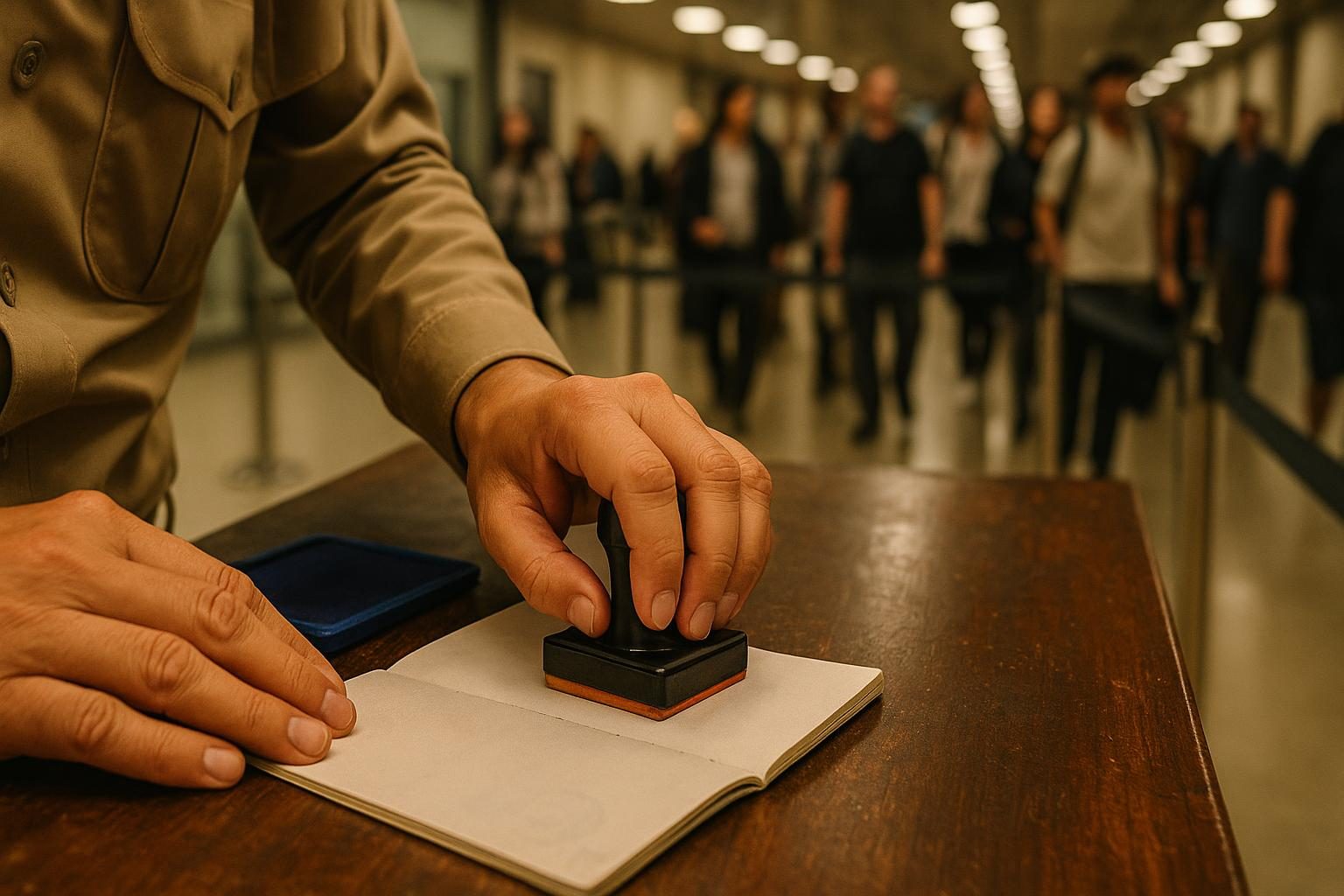
Look at the ink, not the headlines. The date that matters is the permitted-to-stay line. Entered on 10 September with a 60-day exemption? You keep those 60 days. Entered on 1 August? You still have whatever remains of that stamp, and you can still file the usual 1,900-baht, 30-day extension of stay once, on form TM.7, before it runs out.
The repeal instrument published on 31 August has two operative pieces: it ends the old scheme, and it starts the new one fifteen days later. It does not contain a clause that reaches back into a stay already granted. That is why TAT, the Foreign Ministry and every serious immigration note this week say the same thing: existing permission stands.
Leaving Thailand this weekend to reset is the expensive way to donate thirty days. Re-enter on Tuesday and the new 30-day Thai visa exemption is what you get.
If you are still arriving before Tuesday
Sunday and Monday still produce a 60-day stamp for eligible passports, provided the aircraft or land crossing is processed on or before 14 September. A flight that lands at Suvarnabhumi at 23:40 on Monday is a 60-day entry. The same aircraft on Tuesday morning is a 30-day entry. Officers work from the date of inspection, not the date on your ticket.
That is the only weekend move that is actually worth money. It is not a loophole. It is how commencement dates work. If your trip was always going to start this weekend, keep it. If you were going to fly in on the 16th and can shift it to the 14th without wrecking a fare, the extra month is real. Do not invent a trip just to collect a longer stamp.
Thai immigration rules at the next landing
The next time you leave and come back, the picture is different. Eligible ordinary passports from 60 countries and territories get 30 days for tourism. Seychelles and Mauritius get 15. Azerbaijan, Belarus and Serbia move to Visa on Arrival. Separate bilateral deals keep their own periods. India moves onto the 30-day exemption list rather than Visa on Arrival. Check the Gazette list against your own cover, not a forum spreadsheet from May.
Land borders tighten in a way airports do not. Most nationalities may use the visa exemption at a land checkpoint only twice per calendar year. Malaysians, Bruneians, Indonesians and Singaporeans are carved out. Air and sea arrivals are not capped at two, but repeat air entries with no onward ticket still get a conversation.
Living in Thailand after the Thai visa stamp shortens
This is where the Bangkok expat and the Phuket digital nomad feel it, and where Chiang Mai living looks suddenly less casual. A one-year condo lease does not care that your entry is 30 days. Landlords in Sukhumvit, Nimman and Kata have been taking tourist-stamp tenants for years. From next week that mismatch is wider, and some buildings will start asking which visa you actually hold before they take a deposit.
The cost of living in Thailand does not jump because a stamp got shorter. What jumps is friction. You will spend a working day and 1,900 baht in cash on an extension if you want two months. Two of those trips, plus transport and the risk of a missing TM30, already cost more than the government fee on a Destination Thailand Visa.
Renting in Thailand on a tourist exemption also collides with the boring paperwork: banks that want a Non-Immigrant page before they open an account, clinics that ask which visa sits under Thailand healthcare for foreigners, and offices that will not accept a 30-day stamp as proof you live here.
The catches nobody is putting on the group chat
First, proof of funds is not a new rule, but officers reach for it more often when a scheme is in motion. TAT restated the old thresholds: 10,000 baht per person for some visa-exempt and Visa-on-Arrival cases, 20,000 baht per person for tourist and Non-Immigrant visas, double those figures per family. Carry a bank app and a return booking.
Second, the Thailand Digital Arrival Card is still mandatory and still free. File it within three days of landing, every landing.
Third, the exemption is tourism-only from Tuesday. A Bangkok meeting or urgent work now wants a Non-B arranged in advance.
Fourth, provincial variation is real. Chaeng Watthana in Bangkok is a morning operation. Chiang Mai's Promenada office is calmer. Phuket tracks the tourist calendar. If your stamp ends in late September, book the extension now.
When a stamp stops being a plan
If the rest of 2026 is testing whether Hua Hin or Chiang Mai is the best place to live in Thailand, a 30-day exemption plus one extension is a patch. The DTV visa Thailand still costs 10,000 baht for five years and 180 days a pop, filed from the country of your citizenship or legal residence, with a police-clearance certificate attached.
Key takeaways — 11 September 2026
- Already inside? Keep the stamp you have. 15 September does not rewrite a permission already granted.
- Do not leave just to re-enter. A Tuesday arrival is 30 days. A Sunday arrival is still 60.
- The next landing is the real change. Tourism-only exemption, land cap of two a year, TDAC every time.
- Proof of funds is old law, newly visible. Have 10,000-20,000 baht equivalent ready to show, plus a return ticket.
- A lease is longer than a stamp. If you are renting, price a real visa against two extension queues a year.
- Verify your own cover. Sixty countries are not ninety-three, and bilateral deals still sit outside the new list.
The honest summary
Nobody already here is being marched to the airport on Tuesday. The Thai visa story of this weekend is quieter than the headlines: sit on the stamp you have, do not gift thirty days to an unnecessary exit, and treat the next arrival as a different product.
Read the 30-day visa exemption rules for how your nationality is treated, and the DTV requirements if you earn from clients outside Thailand. Then run the free Thailand visa finder.
Sources
- TAT Newsroom, 1 September 2026
- The Thaiger, 10 September 2026
- Khaosod English, 7 September 2026
- Royal Gazette — notifications published 31 August 2026
- Thai Immigration Bureau
- Thai e-Visa portal
This article is for informational purposes only and is not legal or immigration advice. Verified 11 September 2026.